

Internet marketing in the UAE for e-commerce requires a deep understanding of local specifics, cultural characteristics, and the dynamically changing digital landscape. Effective promotion strategies focus on a multichannel approach, including fast targeted advertising for immediate traffic generation and long-term SEO for sustainable organic growth, with mandatory consideration of local preferences and strict legal norms.
Quick Overview
- Multichannel Approach: Combine targeted advertising and SEO to achieve both quick and long-term results.
- Targeted Ads – Quick Start: Facebook and Instagram remain the primary tools for rapidly attracting clients in the UAE.
- SEO – Long-Term Investment: Ensures sustainable organic traffic and builds your brand’s authority in search engines.
- Budgets: Realistic advertising budgets are needed in the UAE – from $60 per day for launch and $1800 per month for stable operation.
- Content Localization: Adapting to local culture and languages (Arabic, English, Hindi, Urdu) is critically important for success.
Why Is Internet Marketing in the UAE So Specific for E-commerce?
Internet marketing for e-commerce in the United Arab Emirates is vastly different from Western markets due to its unique demographics, high-income levels, developed infrastructure, and the dominance of mobile traffic. Consumers here are used to premium service and fast delivery, and competition is constantly growing.
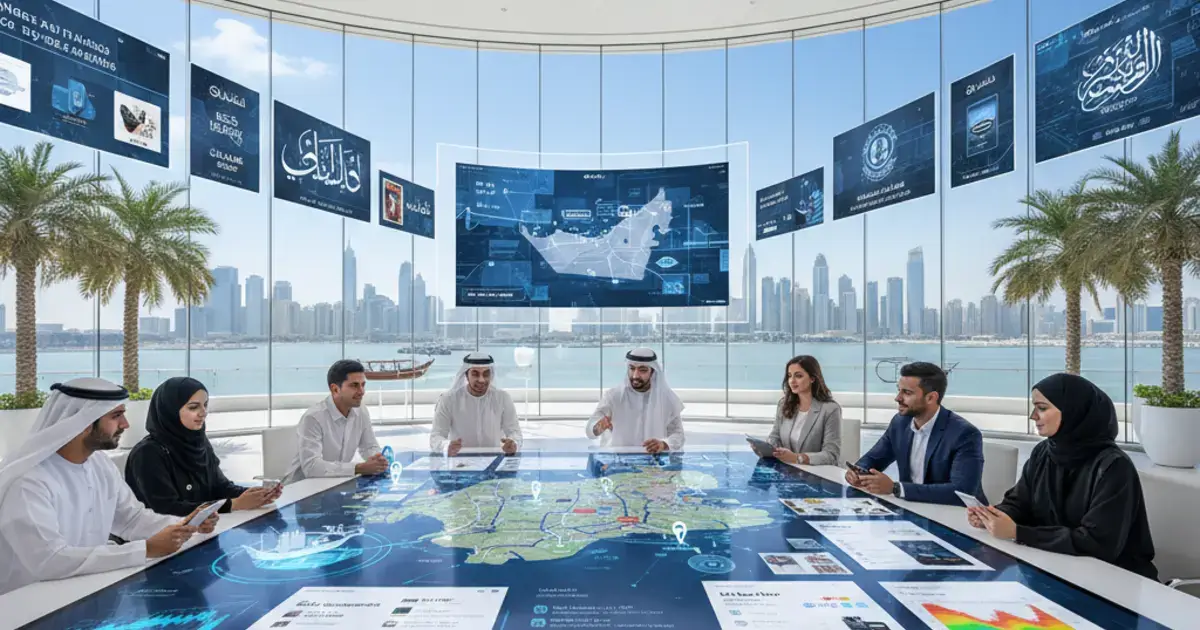
Working with clients in Dubai and Abu Dhabi, I often encounter situations where strategies successful in the West prove ineffective or too expensive without adaptation. The local audience values a personalized approach, high-quality content, and quick responses. Factors like Ramadan, holidays, and national specificities play a crucial role, requiring flexible planning for advertising campaigns and content strategies.
Which E-commerce Promotion Strategies Bring Results in Dubai and the UAE?
Effective e-commerce promotion strategies in Dubai and other Emirates are built on a foundation of data, cultural adaptation, and multichannel engagement. My experience shows that balancing quick and long-term tools is key.
Multichannel Approach as the Foundation for Success:
- Targeted Advertising (Facebook & Instagram): This is the fastest and most reliable way to acquire clients in Dubai. While SEO gains momentum (which takes 3 to 6 months), targeted ads already bring leads. In our practice, when working with e-commerce projects, launching targeted advertising on Facebook and Instagram allows for seeing first sales within the initial days of campaign launch. A minimum test budget to get measurable results ranges from $1800-$2400 (~6600-8800 AED) per month.
- SEO and Content Marketing: For long-term sustainability and reducing customer acquisition costs, search engine optimization and creating valuable content are indispensable. This includes optimizing product cards, categories, creating expert articles and guides that answer user queries on Google and other search engines.
- WhatsApp Business and CRM: In the UAE, WhatsApp is not just a messenger, but a full-fledged sales and support channel. Integration with an e-commerce platform and CRM system allows for efficiently processing inquiries, providing personalized offers, and maintaining communication with clients.
- Influencer Marketing: Collaborating with local bloggers and influencers, especially in fashion, beauty, food, and lifestyle, can significantly boost brand awareness and trust.
- Email Marketing: Segmented newsletters, trigger emails (e.g., for abandoned carts), and personalized offers remain effective tools for repeat sales.
Observations in the Dubai market show that success often comes to those willing to experiment with ad formats, track metrics, and adapt quickly. Analysis of projects in the Emirates demonstrates that even small adjustments in targeting or creatives can significantly improve campaign results.
How Do Search Engine Optimization (SEO) and Content Marketing Work for E-commerce in the UAE?
Search engine optimization (SEO) in the UAE for e-commerce is a strategic tool aimed at increasing the visibility of your online store in search engines, such as Google. Content marketing complements SEO by creating valuable and relevant content that attracts, engages, and retains the audience.

For e-commerce in the Emirates, SEO means optimizing technical aspects of the website (loading speed, mobile responsiveness), structure, meta tags, and, of course, content. My clients often ask how quickly they will see results from SEO. I always honestly reply that it’s a long-term investment: the first noticeable results usually appear after 3-6 months, and sustainable traffic growth after 6-12 months.
Key Aspects of SEO and Content Marketing:
- Keyword Research: Focus on English and Arabic queries. Use LSI keywords and synonyms to cover a wider range of search intents. For example, for an electronics store, this could include not only “buy smartphone Dubai” but also “best phones 2024 UAE” or “iPhone 15 review price.”
- Product Card Optimization: Each product card should have a unique description, high-quality images and videos, and relevant keywords. Customer reviews also play a huge role.
- Localized Content: Create blog articles, guides, and product comparisons that address the questions and pain points of the local audience. Consider cultural nuances and regional specificities. For instance, content for Ramadan or national holidays will be highly in demand.
- Technical SEO: Ensure your website loads quickly, is optimized for mobile devices, has a clean URL structure, and properly configured Schema Markup for products and reviews.
- Authority and Links: Obtain high-quality backlinks from authoritative websites in the UAE. These could be news portals, partner blogs, or industry resources.
“In the highly competitive e-commerce market of the UAE, quality SEO and content marketing are not just an option, but a necessity for building a long-term and sustainable business, reducing dependence on paid advertising.”
Why Are Targeted Ads on Facebook and Instagram the Most Effective Start for E-commerce in the UAE?
Targeted advertising on Facebook and Instagram is the undisputed leader in speed and effectiveness for attracting clients to e-commerce in the UAE, especially at the initial stage. This is due to high audience activity on these platforms, as well as powerful targeting capabilities that allow you to precisely reach your target group.
Based on the results of campaigns launched in the UAE, I can confidently say that no other channel provides such a fast and controlled flow of leads and sales. While SEO requires months to ramp up, targeted ads can start bringing clients within days of launch. Targeted advertising in Dubai is particularly effective due to broad audience segmentation capabilities by interests, income, location, and even behavioral factors.
Key Benefits of Targeted Advertising:
- Fast Results: As I’ve already noted, first sales can appear within a week. This is critical for e-commerce, which needs a quick return on investment.
- Precise Targeting: Ability to target users by geography (Dubai, Abu Dhabi, Sharjah), demographics, interests, behavior, and even create look-alike audiences based on your existing clients.
- Scalability: With a successful campaign, the budget can be easily increased, scaling sales volume.
- Flexibility and Optimization: Ad campaigns can be quickly adjusted, testing different creatives, headlines, and audiences to find the most effective combinations.
- Visual Content: Instagram and Facebook are ideal for showcasing e-commerce products through high-quality photos and videos, which is especially important for aesthetically appealing products.
The minimum daily budget to start operations in Dubai that will yield any representative statistics is from $60 (approximately 220 AED) per day. For stable operation and campaign optimization, it’s recommended to allocate at least $1800 (about 6600 AED) per month. Amounts of 500-1000 AED are simply unrealistic for attracting significant traffic and generating sales in this market.
What Are the Typical Mistakes Made When Promoting E-commerce in the UAE?
Working with dozens of clients in Dubai, Abu Dhabi, and other Emirates, I’ve identified a number of typical mistakes entrepreneurs make when promoting their e-commerce projects. Avoiding these mistakes is already half the battle.

1. Underestimating advertising costs and budgets.
- Many come with Western ideas about budgets. Launching an effective campaign for 500-1000 AED in Dubai is simply impossible. As I mentioned, the minimum test budget is from $1800 (6600 AED) per month. Smaller amounts won’t provide enough data for optimization and will quickly be “wasted” without visible results. You can learn more about the reasons for ineffective advertising strategies in Dubai in one of our articles.
2. Ignoring local specifics and cultural characteristics.
- E-commerce in the UAE requires localization not only of language but also of content, images, and offers. What works in Europe or the USA won’t always resonate with the local audience. For example, certain images or slogans might be unacceptable or irrelevant.
3. Lack of an omnichannel strategy.
- Expecting that a single channel (e.g., only SEO or only targeted ads) will bring all sales is a big mistake. The consumer journey here is complex and involves multiple touchpoints. A combination of paid channels, SEO, email marketing, and WhatsApp yields maximum effect.
4. Poor logistics and customer service.
- For e-commerce in the UAE, fast and reliable delivery is not an advantage, but a standard. Customers expect same-day or next-day delivery. A poor delivery experience or slow support can ruin a reputation, even if the marketing was perfect.
5. Lack of mobile website adaptation.
- Most purchases in the UAE are made from mobile phones. If your website is slow, inconvenient on a smartphone, or has adaptability issues, you lose a huge portion of potential clients. This is a basic but frequently encountered mistake. Learn how to avoid common advertising mistakes in Dubai to increase bookings or sales immediately.
6. Insufficient work with reviews and reputation.
- In the UAE, reputation plays a huge role. Positive reviews are a powerful sales driver, while negative ones can quickly deter potential buyers. It’s important to actively collect reviews and respond promptly to all feedback.
“My practice shows: ignoring local specifics and underestimating advertising budgets are the two most common “killers” of e-commerce projects in the UAE.”
How to Choose the Right Promotion Channels for Your E-commerce in the UAE?
Choosing the right promotion channels for your e-commerce in the UAE is a strategic decision that depends on your product, target audience, and budget. There’s no one-size-fits-all solution, but there are proven approaches I use with my clients.
Step-by-step recommendations:
- Define your target audience: Who is your ideal buyer? Where do they spend their time online? What are their income, interests, and preferences? For example, if your product is aimed at a local Emirati audience, Snapchat might be a more effective channel than for expats.
- Analyze competitors: Study which channels your successful competitors in Dubai are using. Where do they advertise? What content do they publish? This will give you valuable insights and help identify gaps.
- Start with targeted advertising (Facebook and Instagram): As I’ve repeatedly emphasized, this is the fastest and most stable way to test hypotheses, get initial sales, and gather audience data. Invest in a test period of at least $1800 per month to get reliable results.
- Invest in SEO and content: Once you see initial results from paid advertising, start developing organic promotion in parallel. This will take time (3-6 months until first results), but in the long run, it will reduce customer acquisition costs and make your business more sustainable.
- Consider other platforms:
- Google Ads: For direct demand, when users are already looking for a specific product or service.
- TikTok: If your audience is younger and you’re ready for dynamic, viral content.
- Snapchat: Very popular among the Arabic-speaking audience in the UAE, especially for fashion, beauty, and F&B.
- LinkedIn: If your e-commerce is related to B2B products or services.
- Don’t forget about offline integration: Shopping malls and physical stores are still strong in the UAE. If you have an offline point, integrate it with your online strategy (e.g., “buy online, pick up in store” or advertising your online store in offline spaces).
How to Measure the Effectiveness of Internet Marketing for E-commerce in the UAE?
Measuring effectiveness is a critically important stage in e-commerce internet marketing. Without clear metrics and regular analysis, it’s impossible to understand what works and what needs adjustment. In the UAE market, where every dirham counts, this becomes even more relevant.

Key Metrics and Their Interpretation:
- ROI (Return on Investment) and ROAS (Return on Ad Spend): These metrics show how much you earn for every dollar invested. For e-commerce, ROAS should be significantly higher than 1:1 to cover the cost of goods, logistics, and other expenses. In our practice, successful campaigns demonstrate ROAS from 3:1 to 5:1, and sometimes even higher.
- CAC (Customer Acquisition Cost): Determine how much it costs you to acquire one new customer. Compare this metric with LTV (Lifetime Value) – the lifetime value of a client. If CAC > LTV, your business model is unsustainable.
- Conversion Rate: The percentage of visitors who make a purchase. Track conversion by each channel, device type, and geography. A good conversion rate for e-commerce in the UAE can range from 1% to 5% or higher, depending on the niche.
- Average Order Value (AOV): The higher the average order value, the more effectively you are using traffic. Strive to increase it through cross-selling and upselling.
- Traffic and its quality: Not just the number of visitors, but their engagement (time on site, depth of view, bounce rate). A low bounce rate and long time on site indicate traffic relevance.
- Organic Traffic: Monitor the growth of organic traffic from SEO. This is a slow but most valuable indicator of long-term sustainability. A 20-30% annual growth in organic traffic is considered a very good result for e-commerce in a competitive niche.
I always recommend my clients in the UAE to use comprehensive analytical systems, such as Google Analytics 4, as well as internal reports from advertising accounts. Regular analysis (at least once a week) allows for quickly adjusting strategies and optimizing advertising expenses, so you don’t waste your advertising budget in the UAE without sales.
Frequently Asked Questions
How much does it cost to launch internet marketing for e-commerce in the UAE?
The initial budget for launching internet marketing in the UAE, including a test period for targeted advertising and basic preparation, usually ranges from $1800 to $2400 (6600-8800 AED) per month. This allows for conducting initial tests and gathering data for optimization. Long-term investments in SEO and content marketing are paid separately.
When can I expect the first results from e-commerce promotion in Dubai?
When using targeted advertising on Facebook and Instagram, the first leads and sales can appear within the first few days or weeks after launch. For SEO and organic promotion, the results are more long-term – usually 3-6 months until noticeable growth in traffic and rankings.
Which social media platforms are most effective for e-commerce in the UAE?
Instagram and Facebook are the most effective for e-commerce in the UAE due to broad targeting capabilities and popularity among buyers. For specific audiences, Snapchat (youth, Arabic speakers) and TikTok (viral content) can also be effective.
How does e-commerce promotion in the UAE differ from other countries?
E-commerce promotion in the UAE is characterized by a high level of competition, demanding audience expectations for service and delivery, and the need for deep cultural and linguistic content adaptation. Specific holidays and local traditions, as well as higher advertising budgets, play an important role.
How to choose an internet marketing specialist for e-commerce in the UAE?
Choose a specialist with proven experience working on e-commerce projects specifically in the UAE. Pay attention to case studies, measurable results (traffic growth, CPA reduction, ROAS increase), and their understanding of local specifics, legislation, and cultural nuances. It’s important that the specialist can discuss realistic budgets and timelines.
👉 Subscribe to my Telegram channel.
✉️ Message me on WhatsApp if you need clients.
📸 Follow updates on Instagram.