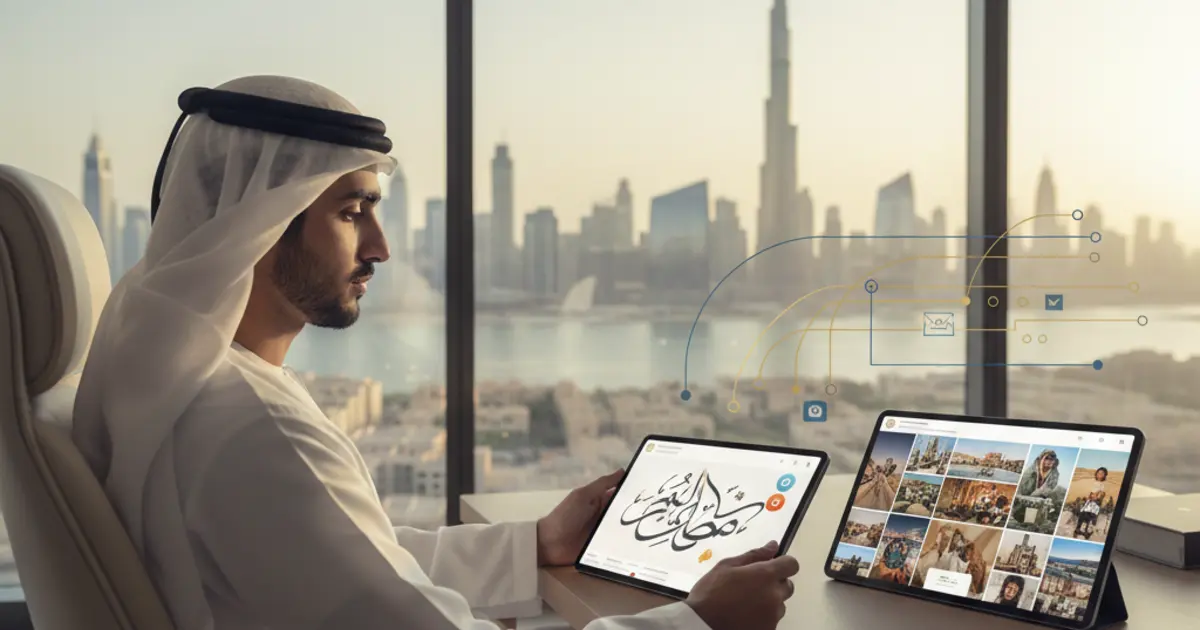

Adapting content for Arab social media isn’t just about translation; it’s about diving deep into the cultural specifics, values, and behavioral patterns of the target audience in the UAE. Successful promotion requires a thorough understanding of local traditions, preferences in visual and text content, and actively using popular platforms like Instagram, Facebook, TikTok, and Snapchat. This approach helps build long-term customer relationships, significantly boosts engagement, and consequently, conversions—something my many years of working with brands in Dubai, Abu Dhabi, and other emirates clearly confirms.
Here’s the Lowdown
- Cultural relevance is the bedrock of successful content adaptation in the UAE; ignoring it leads to failure.
- Visual content must not only be high-quality but also align with local norms and aesthetics, featuring recognizable locations and faces.
- Textual presentation demands precision, respect for traditions, correct Arabic language usage, and consideration of regional dialects.
- Targeted advertising on Facebook and Instagram is the most reliable and quickest way to get qualified leads and boost sales in Dubai and other emirates.
- Long-term organic promotion through SEO and adapted content strengthens the brand but takes time (3-6 months for tangible results).
What is Content Adaptation for Arab Social Media in Dubai and Why Does It Matter?
Content adaptation for Arab social media is a comprehensive process of deeply transforming marketing materials to make them as relevant and appealing as possible to the Arabic-speaking audience in the United Arab Emirates. It’s much more than just a simple translation; the process involves changing visual elements, tone, style, cultural references, and also considering the specifics of each social platform and even publication times. In the Dubai market, where competition for consumer attention is incredibly high and the audience is extremely selective, ignoring deep cultural content adaptation almost always leads to a significant loss in advertising campaign effectiveness and, consequently, a reduced return on investment (ROI).
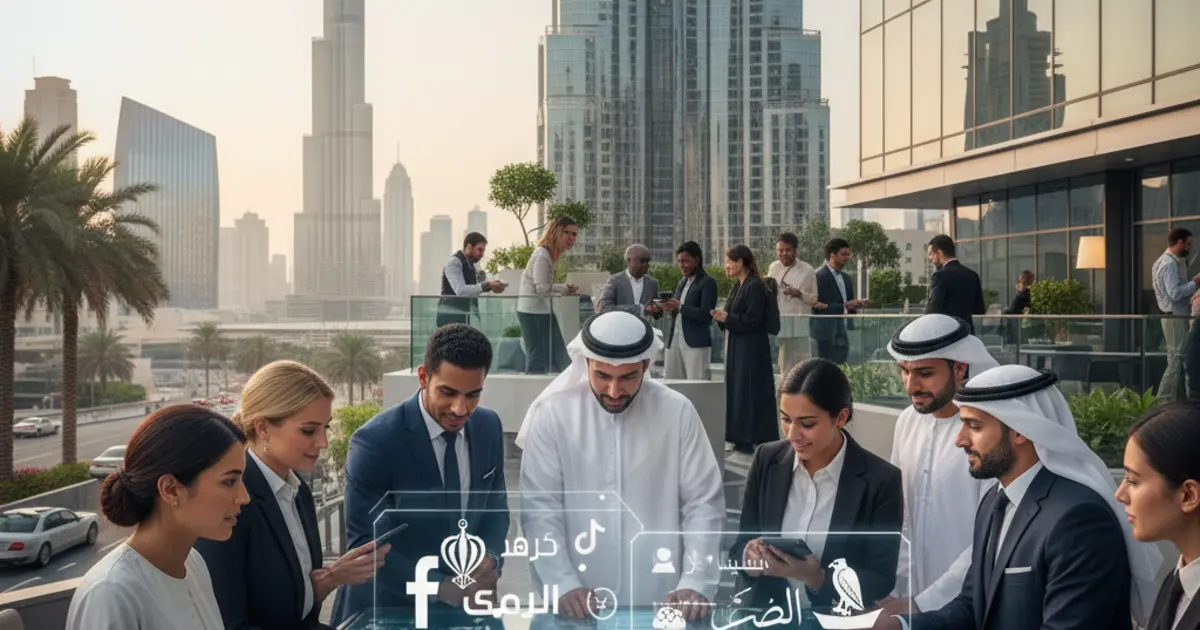
“My experience has shown that content failing to consider local nuances and cultural specificities of the UAE is perceived by the audience as alien, often leading not just to a lack of interest, but even negative reactions. This is a direct path to losing brand trust and inefficiently spending advertising budgets.”
The UAE is home to a multinational audience, yet Arab culture and Islamic values play a dominant role in shaping public opinion and consumer behavior. Therefore, to achieve measurable and sustainable results, your content needs to be not just high-quality and creative, but also deeply rooted in the local cultural and social context. This factor becomes especially critical for brands aiming for a long-term market presence and building a loyal customer base. Understanding the cultural code helps not only avoid mistakes but also create truly captivating and high-converting messages.
What Cultural Specifics of the UAE Should You Consider When Creating Content?
Successful content adaptation in the UAE starts with a deep understanding of the region’s cultural and religious characteristics. Islam is dominant in the Emirates, and its norms influence all aspects of life, including information and content consumption. Here are the key aspects we always carefully consider in our work:
- Respect for Traditions and Religion. Absolutely avoid images, texts, or symbols that could be perceived as disrespectful towards Islam, local customs, or the government. This includes not just direct prohibitions, but also subtle nuances in clothing, gestures, the use of certain symbols, and even color palettes. For instance, red might be associated with danger, while green is linked to Islam.
- The Central Role of Family Values. Family plays an absolutely central role in Arab culture. Content that emphasizes strong family ties, respect for elders, care for children, and home comfort generally resonates much more and builds trust.
- Appropriate Portrayal of Women. The depiction of women in content should always comply with local modesty norms. Images of women in traditional attire or in contexts that avoid ambiguity or undesirable associations are often preferred.
- Language and Dialects. While Modern Standard Arabic (Fus’ha) is understood, using local dialects or specific expressions, especially in informal content, can significantly boost engagement and a sense of closeness with the audience. In Dubai and Abu Dhabi, the Gulf dialect is most commonly used.
- Aesthetics and Symbolism. Certain colors and symbols hold special meaning. Beyond religious associations, it’s worth remembering that luxury, quality, and high status are highly valued in the UAE. Visual elements that convey these feelings often work wonders.
For example, while working with a client in luxury real estate in Abu Dhabi, we noticed that ads featuring happy families spending time in spacious and opulent homes showed 30-35% higher conversion rates than those focusing solely on architectural features and interiors. This clearly demonstrates the power and importance of a culturally-oriented approach to marketing in the UAE.
How to Adapt Visual Content for Dubai’s Social Media?
Visual content is the first thing that catches a user’s eye in the endless scroll of social media feeds. In Dubai, where aesthetics, high living standards, and quality play a huge role, adapting it becomes critically important for success. My observations, based on dozens of launched campaigns, show that:
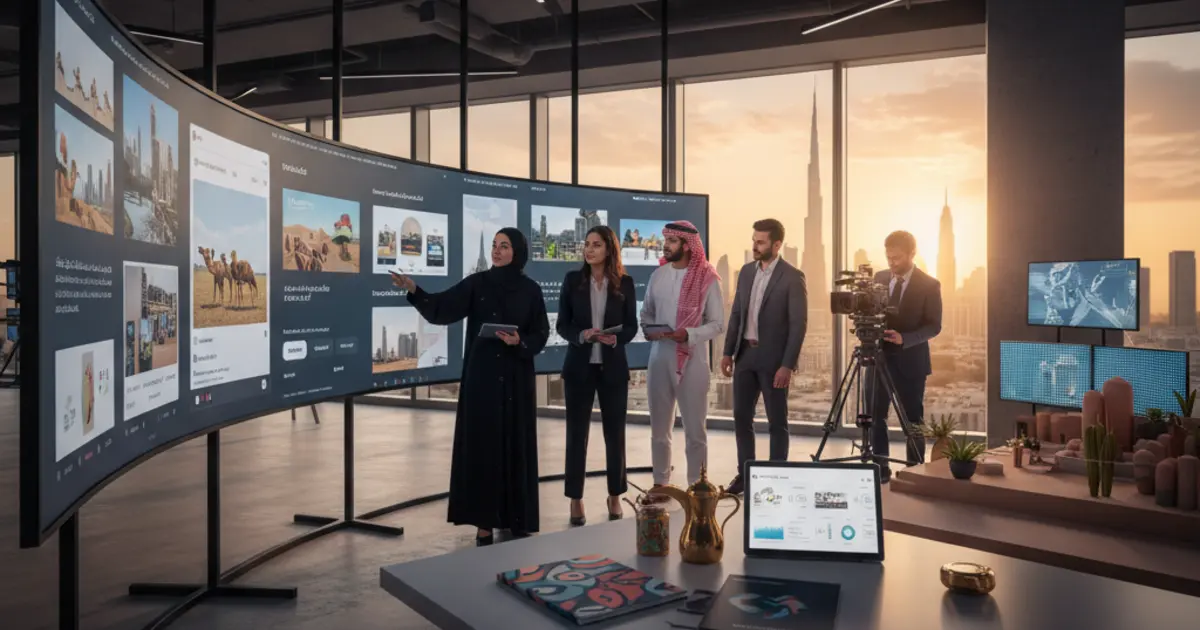
- Exceptionally High-Quality Images and Videos. No grainy photos, blurry shots, or amateur videos. Premium quality and professional filming are the absolute standard in the Dubai market. The audience here is spoiled and instantly recognizes low-quality content.
- Strong Local Connection and Recognition. Using recognizable Dubai landmarks like Burj Khalifa, Palm Jumeirah, or characteristic UAE landscapes always boosts engagement. People love seeing familiar places and associating a product or service with their home city.
- Representative Models and Locations. If you’re using models, it’s preferable to choose people who resemble residents of the region—both locals and expats—reflecting Dubai’s diversity. Locations should also be relevant and aesthetically appealing.
- Aesthetics of Luxury and Success. In the UAE, success, high social status, and luxury are highly valued. Visuals that convey these feelings (elegant design, expensive accessories, beautiful interiors, modern technology) often prove significantly more appealing, especially for premium segments.
- Adaptation to Platform Specifics. Snapchat and TikTok demand more dynamic, short, and entertaining content, often using local trends and challenges. Instagram is suitable for more polished, highly aesthetic images and videos, Stories, and Reels. Facebook allows for longer and more informative formats, including full articles and extended videos.
In our practice, when we launched an ad campaign for an exclusive clothing boutique in Dubai, switching from standard European models to models who matched local types and style preferences, even if the clothing displayed was Western, led to a 25-30% increase in CTR and lowered lead costs by 15-20%. This is a clear example of how detailed visual adaptation directly impacts financial metrics and investment efficiency.
What Are the Text Content and Language Specifics for the UAE Audience?
The textual component of content on Arab social media demands particular care and professionalism. It’s not just about accurate translation, but also a deep understanding of language nuances, style, and cultural codes accepted in the UAE. Here’s what I strongly recommend paying attention to, based on my experience:
- Balance Between Formal and Informal Arabic. Modern Standard Arabic (Fus’ha) is often preferred, as it’s perceived as more formal and respectful. However, in less formal contexts, especially on platforms like TikTok or Snapchat, using the local Gulf dialect can create a more personal and trusting connection. English is also widely spoken, particularly among expats and in business settings, so an effective bilingual approach is often used.
- Using Respectful Salutations and Forms of Politeness. Titles, correct forms of address, and common courtesies are extremely important in Arab culture. Avoid excessive familiarity or bluntness if it doesn’t align with the overall brand tone.
- Brevity, Clarity, and Persuasiveness. On social media, concise but highly informative messages are valued. The main idea should be conveyed quickly, yet emotionally and convincingly.
- Clear and Motivating Calls to Action (CTAs). These should be unambiguous, direct, and motivate the audience to take the desired action. For example: “Learn more now,” “Book today,” “Contact us on WhatsApp.”
- Extreme Caution with Humor. Humor is a very delicate matter, and what’s funny in one culture might be misunderstood, inappropriate, or even offensive in another. It’s best to avoid ambiguous or sarcastic jokes unless you are 100% certain of how they will be perceived.
For one of my clients offering financial services, we significantly shifted the tone of messages from dry and official to more respectful and client-problem-solving oriented, adding cultural references to family well-being and long-term planning. This led to a 40% increase in comment engagement and a 20% rise in inquiries via the contact form within a month. While organic promotion through content and increasing brand awareness in the UAE gain momentum and provide long-term effects, the quickest way to acquire clients in Dubai and Abu Dhabi remains targeted advertising on Facebook and Instagram. It allows businesses to immediately reach the right audience and get leads in the very first days after launching a campaign, providing a rapid influx of leads and sales.
Which Social Networks are Most Popular in the UAE and How to Adapt Content for Them?
The social media landscape in the UAE has its distinct characteristics that need to be considered. Despite the global dominance of certain platforms, local preferences and demographics can vary significantly, dictating their own rules for content adaptation:
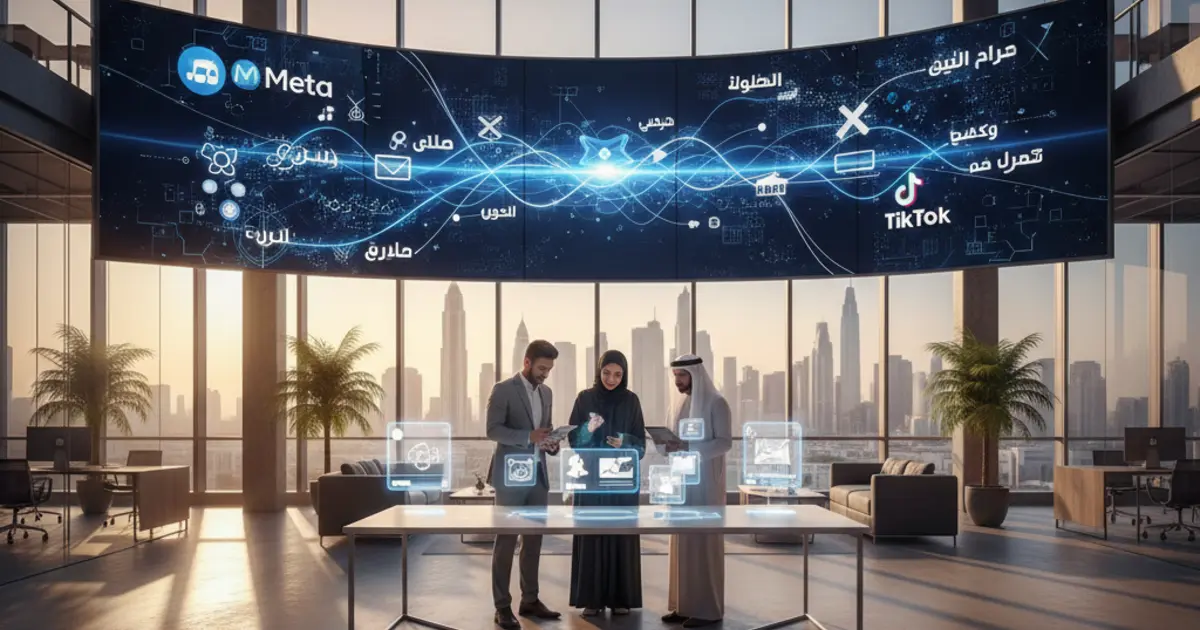
- Instagram: Extremely popular for visual content—high-quality photos, Stories, Reels. Ideal for brands focusing on fashion, food, tourism, real estate, luxury goods, and lifestyle. Here, aesthetics, the use of relevant hashtags, and creative storytelling through video formats are critically important.
- Facebook: Remains a strong platform for an older audience, as well as for interest groups, news, and discussions. It’s excellent for informative content, articles, long videos, and community building. Targeted advertising here allows for very precise audience targeting based on demographics, interests, and behavior.
- Snapchat: Especially popular among youth and the Arab audience, offering a unique format of fast, disappearing content. Ideal for instant promotions, behind-the-scenes content, and engagement through interactive filters and augmented reality.
- TikTok: Rapidly gaining momentum, especially among younger generations in the UAE. Short, viral videos, challenges, trends—that’s its essence. For brands, it’s a huge opportunity to showcase themselves creatively, entertainingly, and authentically.
- LinkedIn: A key platform for B2B communications, professional networking, and recruiting. Content here should be strictly expert-driven, business-oriented, and focused on professional growth, business development, and sharing expertise.
It’s important to remember that each channel requires its own unique strategy and content approach. For example, the same short, dynamic video that would “go viral” on TikTok would be perceived entirely differently and likely flop on LinkedIn without significant adaptation. My experience working with targeted advertising for corporate agencies in Dubai shows that only a multi-platform approach with careful content adaptation for each channel yields the best and most consistent results.
“Observations from the Dubai market in 2024-2025 show that brands successfully adapting their content to the specifics of each social platform achieve significantly higher engagement and conversion rates than those who simply duplicate the same message everywhere mindlessly.”
How to Measure the Effectiveness of Adapted Content and Advertising Budgets in the UAE?
Measuring effectiveness is a crucial stage of any marketing strategy, and in the UAE, with its dynamic market and high advertising budgets, it’s especially important. We always rely on a comprehensive set of metrics to get the full picture:
- Engagement Metrics: The number of likes, comments, shares, saves, and video watch time. These are basic indicators of audience interest and resonance with your content.
- Click-Through Rate (CTR): This metric shows how well content motivates users to click through to a target page (website, landing page, product page). A high CTR indicates the message’s relevance and appeal.
- Conversions: The most important metric, directly impacting ROI. This includes the number of leads, actual sales, event registrations, app downloads, or any other desired action.
- Cost Per Lead (CPL) and Cost Per Acquisition (CPA): In the UAE, these metrics can be higher than in other regions due to intense competition and a premium audience segment. We always aim to optimize them through testing and content improvement.
- Reach and Frequency: Shows how many unique users saw your content and how often. This is important for managing brand awareness and preventing audience “burnout.”
Regarding advertising budgets, the Dubai and UAE market has its very specific realities that differ significantly from many other countries. Launching a truly effective and successful targeted campaign requires appropriate funding:
- Minimum daily budget to start — from $60 per day (which is approximately 220 dirhams per day). A smaller amount simply won’t allow for enough data collection for optimization.
- Minimum monthly budget for stable operation — from $1800 per month (approximately 6600 dirhams per month). This ensures sufficient reach and frequency to get regular leads.
- The testing period, which is absolutely necessary for collecting statistical data, deep analysis, and subsequent campaign optimization, usually amounts to at least $1800-$2400 (approximately 6600-8800 dirhams). Using amounts like “500 dirhams” or “1000 dirhams” for launching advertising campaigns in Dubai is completely unrealistic for achieving any significant or measurable results. Such budgets will simply “burn out” without effect.
Based on the results of campaigns launched in the UAE, with proper content adaptation and smart optimization, we achieve a 20-30% reduction in CPL within 2-3 months after launch. For example, for a client in the tourism sector in Abu Dhabi, thanks to meticulous content work, precise geotargeting, and deep segmentation, we lowered the cost of attracting a tourist from $40 to $28 per lead, significantly increasing the number of bookings.
GEO-Specifics: How Content Localization Impacts Reach Across Different UAE Emirates?
The United Arab Emirates isn’t a single market, but seven different emirates, each with its unique specifics, demographics, and cultural nuances. This cannot be ignored when adapting content, otherwise, campaign effectiveness will be significantly reduced. For instance, the populations of Dubai and Abu Dhabi are much more cosmopolitan and open to Western influences, while in Sharjah or Ajman, norms can be considerably more conservative and traditional.
- Dubai and Abu Dhabi: More experimentation with content formats and styles is permissible here, and active use of English alongside Arabic is possible. The emphasis is on innovation, modernity, luxury, world-class service, and unique offers. The audience in these metropolises is often more receptive to global trends.
- Sharjah and Ajman: These emirates are considered more traditional. Content must be maximally respectful of local traditions, with a greater emphasis on family values, spirituality, and cultural heritage. Modesty and quality are valued here, rather than extravagance. Religious norms play a more pronounced role in shaping public opinion.
- Fujairah, Umm Al Quwain, Ras Al Khaimah: These emirates require an even more nuanced and personalized approach. Often, the audience here is more local, and personal recommendations, as well as the use of local flavor, landscapes, and symbolism in content, work significantly better. Authenticity and a sense of belonging are important.
Working with a company offering sports car rentals in Dubai, we found that content aimed at expats and tourists worked perfectly in Dubai, attracting many leads. However, the same content launched in Sharjah yielded almost no results. Sharjah required a completely different approach, where the emphasis shifted to exclusivity, status, and the opportunity to enjoy a comfortable ride, rather than speed and adrenaline, which aligned with local preferences.
Common Mistakes When Adapting Content for Arab Social Media
Even the most experienced marketers sometimes make serious blunders when it comes to a market as specific and sensitive as the UAE. Over the years, I’ve compiled a list of common mistakes that can cost clients not only a lot of money but also missed opportunities and damaged reputations:
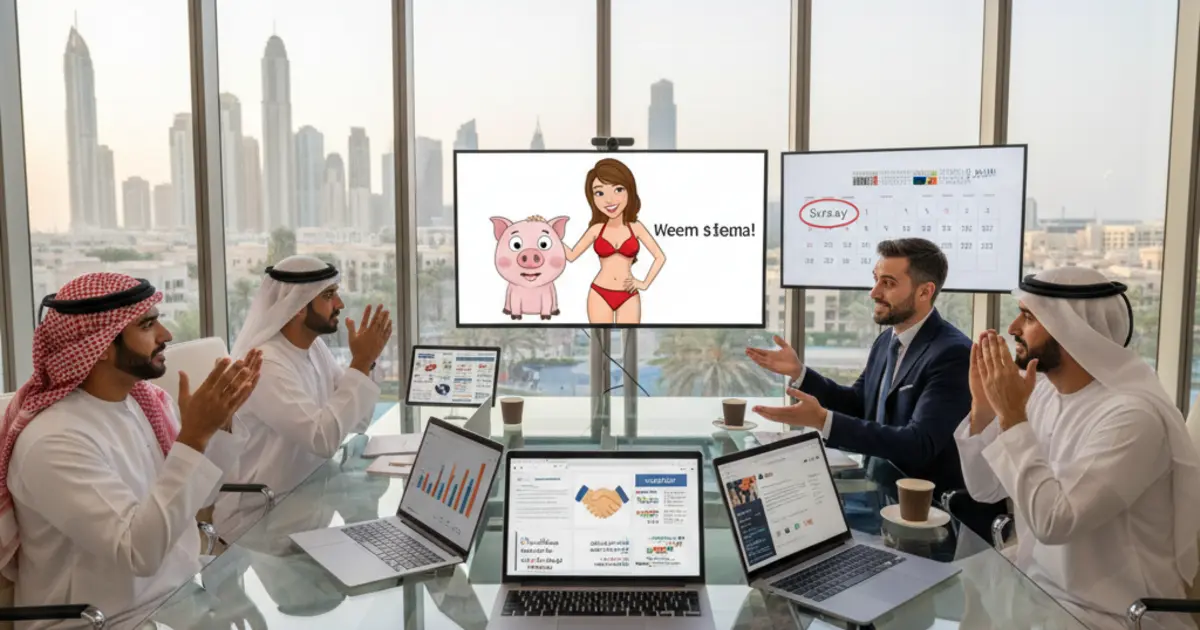
- Literal Translation Without Cultural Adaptation. This is the most frequent and arguably the most damaging mistake. A translator might be an excellent linguist, but they’re not necessarily a marketer and a native speaker of the local culture. The result is content that can be meaningless, irrelevant, or even offensive, completely missing the target audience.
- Ignoring Religious Holidays and Traditions. Publishing promotional posts during Ramadan that fail to consider fasting, the special nature of the month, and religious sentiments, or promoting irrelevant products during this time. An inappropriate greeting can also be perceived negatively.
- Incorrect Choice of Visual Materials. Using images that don’t comply with local modesty norms (e.g., overly revealing clothing, inappropriate gestures, images that create ambiguity). This can quickly lead to account blocking or negative reactions.
- Using One-Size-Fits-All Content for All Platforms. Duplicating the same short video from TikTok to LinkedIn without any repurposing is a classic example of this mistake. Each platform has its own audience and content consumption format.
- Inadequate Advertising Budgets. Attempting to launch a serious advertising campaign in Dubai with a budget of 500-1000 dirhams. This leads to a rapid budget burnout without any significant results. As I’ve repeatedly mentioned, the minimum test budget for adequate data collection and any effectiveness whatsoever should be at least $1800-$2400. Smaller amounts are just money down the drain.
- Lack of Localized Calls to Action. If the call to action isn’t clear, doesn’t motivate, or fails to consider the linguistic specifics of the local audience, campaign effectiveness drops sharply. CTAs must be adapted just as carefully as the main content.
- Disregarding Response Speed and Service. The Arab audience, especially in the premium segment, expects extremely fast responses to their inquiries, messages, and comments. Delays in replies can cost you not only a potential client but also your brand’s reputation.
“Working with clients in Dubai and Abu Dhabi, I’ve repeatedly seen brands lose huge potential opportunities and clients due to simple but critical errors in cultural adaptation and a misunderstanding of local specifics. This isn’t just lost profit; it’s an erosion of brand trust for years that’s very difficult to rebuild.”
Organic promotion, of course, provides a stable effect in the long term (3-6 months for tangible results), but for quickly attracting clients in Dubai and Abu Dhabi, you need to use targeted advertising on Facebook and Instagram. It allows you to reach the target audience and get the first leads within days, while SEO gains strength and builds long-term visibility.
Practical Recommendations for Adapting Content for Success in the UAE
To ensure your content doesn’t just exist on Arab social media but delivers real and measurable results, stick to these practical recommendations, based on my personal experience and deep analysis of the UAE market:
- Hire a Local Expert or Partner with a Local Agency. This is the best and most reliable way to avoid cultural mistakes and ensure genuine content relevance. A person or team living and working in the UAE understands all the subtle nuances that can’t be learned from textbooks or general guides. They’ll help create content that deeply resonates with the local audience.
- Conduct Systematic A/B Testing. Even with the most experienced expert, always test different content variations (visuals, text, calls to action) on small but relevant audience segments. This allows you to quickly determine what works best and continuously optimize expenses, boosting efficiency.
- Actively Monitor Local Trends and Influencers. In the UAE, just like everywhere else, there are unique trends, challenges, popular personalities, and communication styles. Integrating with them or organically following current trends can significantly boost your brand’s reach, engagement, and authority.
- Use Arabic Professionally and Flawlessly. If you’re not 100% confident in the translation quality, it’s better to pay extra for a professional review by a native speaker and marketing expert. Grammatical errors, incorrect phrases, or stylistic inaccuracies can erode trust in your brand and create an impression of unprofessionalism.
- Optimize Publication Times for Local Realities. Carefully analyze your target audience’s activity on various social networks. In the UAE, work schedules and weekends might differ from what you’re used to (e.g., Friday and Saturday are weekend days, and peak activity might be in the evening after sunset).
- Develop a Targeted Advertising Strategy. Again, targeted advertising on Facebook and Instagram is your most reliable and quickest way to get clients. Focus on precisely tuning your audience based on interests, behavior, geolocation in the UAE, demographics, and even specific preferences. This will allow you to use advertising budgets from $1800 per month most effectively, securing a steady flow of quality leads.
- Actively and Promptly Engage with Your Audience. Respond to comments and messages as quickly and respectfully as possible. Create a dialogue, don’t just broadcast. In the UAE, where service is highly valued, the speed and quality of feedback play a huge role.
Analysis of projects in the Emirates shows that companies adopting a systematic and thoughtful approach to content adaptation not only significantly boost sales and lead generation but also greatly strengthen brand loyalty, building long-term customer relationships. This isn’t just a one-time expense but a strategic investment that pays off many times over in the long run, creating a strong and recognizable brand in a competitive market like the UAE.
Frequently Asked Questions
-
How long does it take to adapt content for the UAE?
The time needed for content adaptation heavily depends on the volume and complexity of the materials. Small ad campaigns or individual posts can be adapted in a few days, but developing a full-fledged content strategy with deep cultural immersion, testing, and optimization will require 2 to 4 weeks. It’s crucial not to rush to avoid costly mistakes.

-
Which social media networks are most effective for businesses in Dubai?
For most businesses in Dubai, Instagram and Facebook are the most effective, especially when using well-tuned targeted advertising. TikTok and Snapchat are great for engaging with a younger audience and for viral, entertaining content. LinkedIn, on the other hand, is indispensable for B2B communications and professional networking.
-
When can I expect results from adapted social media content?
With active use of targeted advertising, you can get the first leads and results within days of launching a campaign. Organic promotion through adapted content is a long-term strategy that brings stable and increasing results 3-6 months after systematic implementation.
-
How does promotion in Dubai differ from other UAE emirates?
Dubai is more cosmopolitan, open to innovation, and has a larger expat population, which allows for bolder and more international approaches to content. In other emirates, especially Sharjah or Ajman, a more conservative approach is required, respecting local traditions, with an emphasis on family values, spirituality, and local flavor.
-
How important is Arabic for content in the UAE if most people speak English?
While English is widely spoken, especially in Dubai’s business environment, Arabic is the native language for a significant portion of the population, and its use demonstrates deep respect for local culture and traditions. A bilingual approach (Arabic and English) often proves most effective, especially in content aimed at the broad and diverse audience of the UAE.
-
Can automatic translators be used for content adaptation?
Absolutely not. Automatic translators cannot account for the subtle cultural nuances, idioms, tone, context, and emotional coloring that are critically important for the Arab audience. The result of such a translation can be incorrect, inappropriate, funny, or even offensive, which will irreparably harm your brand’s reputation and your marketing efforts.
👉 Subscribe to my Telegram channel.
✉️ Message me on WhatsApp if you need clients.
📸 Follow updates on Instagram.