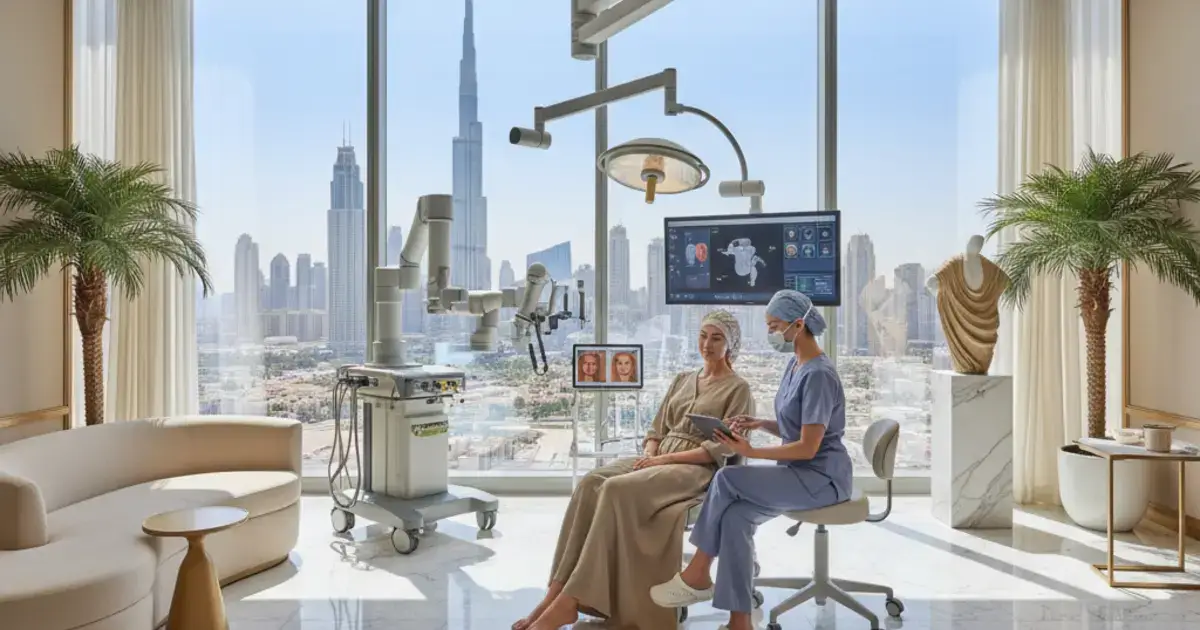

Advertising plastic surgery in the UAE is a complex, yet extremely promising process that requires a deep understanding of local legislation, cultural specifics, and digital tools. Successful promotion of procedures in the United Arab Emirates relies on a smart strategy that combines ethical communication, high-precision targeting, and strict adherence to regulatory requirements to effectively attract patients in Dubai and other emirates.
Here’s the Lowdown
- Strict Regulations: Plastic surgery advertising in the UAE is regulated by the Dubai Health Authority (DHA) and other local bodies, demanding special attention to ethics and content.
- Focus on Expertise & Trust: Patients aren’t just looking for results; they also want safety guarantees. That’s why highlighting doctor qualifications and technology is crucial.
- Omnichannel Approach: Effective promotion of procedures in the United Arab Emirates involves a combination of SEO, targeted advertising, content marketing, and PR.
- Content Localization: Success hinges on adapting messages to the cultural and linguistic nuances of the target audience in Dubai, Abu Dhabi, and other emirates.
- Analytics & Optimization: Continuous monitoring and adjustment of campaigns help achieve measurable growth in organic traffic and reduce patient acquisition costs.
Why is Plastic Surgery Advertising in the UAE Both a Challenge and an Opportunity?
Advertising plastic surgery in the UAE offers a unique blend of challenges and unparalleled opportunities. On one hand, the market is highly competitive, filled with both local and international clinics. On the other hand, the UAE is a medical tourism hub where demand for high-quality aesthetic procedures is steadily increasing. The middle class and affluent residents actively invest in their appearance, creating fertile ground for growth.

Based on observations in the Dubai market, patients seeking plastic surgery are extremely demanding when it comes to specialist qualifications and service levels. They’re willing to pay for quality and safety, which opens doors for premium clinics and top-tier surgeons, provided their marketing is structured correctly.
One key characteristic is the high average cost of procedures and a relatively low willingness to compromise when choosing a specialist. This means advertising campaigns should focus not just on awareness, but also on building trust and authority. My experience working with clients in Dubai shows that even clinics with limited budgets can achieve impressive results if they focus on ethical, high-quality content that addresses specific patient “pain points.”
The Specifics of Promoting Procedures in the UAE: Laws and Ethics
The promotion of procedures in the United Arab Emirates is strictly regulated by local health authorities, such as the DHA (Dubai Health Authority) in Dubai, DOH (Department of Health) in Abu Dhabi, and MOHAP (Ministry of Health and Prevention) at the federal level. These rules aim to protect patients and prevent dishonest advertising. Key aspects include:
- No Promises: You can’t guarantee 100% results or a complete absence of risks.
- Ethical Images: The use of provocative, overly explicit, or misleading “before/after” images is strictly forbidden without explicit patient consent and clear disclaimers. All materials must be approved by the regulatory body.
- Focus on Qualifications: Advertising should highlight doctors’ licenses, experience, and specialization, not just aesthetic results.
- No Aggression: Any forms of aggressive pressure on patients are prohibited.
In our practice, when working with medical centers, we always start by thoroughly studying the current regulations for promoting medical services. For example, one of our projects in Dubai, related to cosmetology, faced rejection of ad creatives due to overly “perfect” images. We had to rework the campaign, focusing on technology and doctor expertise rather than visual promises. This led to increased trust and, consequently, a 20% rise in leads over three months, even though the initial creatives were more eye-catching.
Analysis of projects in the Emirates shows that transparency and honesty in communication aren’t just ethical norms; they’re powerful marketing tools that build long-term relationships with patients.
How to Effectively Attract Patients in Dubai: Channels and Tools
Effectively attracting patients in Dubai requires an omnichannel strategy, covering both organic and paid methods. My observations show that the most successful clinics use a comprehensive approach:
Search Engine Optimization (SEO) and Content Marketing
This is the foundation for long-term growth. Patients actively search for information about procedures, clinics, and doctors. SEO for plastic surgery in the UAE should include:
- Local SEO: Optimizing Google My Business (Google Business Profile) with detailed information, reviews, and photos.
- Keywords: Using queries like “rhinoplasty Dubai price,” “best plastic surgeon in Abu Dhabi,” “breast augmentation UAE reviews.”
- Expert Content: Creating articles, blogs, FAQ sections, and videos that answer patient questions, dispel myths, and demonstrate expertise. For example, detailed guides on preparing for surgery or recovery.
Example: When promoting medical specialists, I often find that high-quality content addressing real patient questions works far more effectively than direct advertising. A clinic blog with detailed procedure descriptions, doctor’s advice, and real patient stories (with their consent) can become a powerful source of organic traffic.
Targeted Advertising on Social Media: Instagram, Facebook, TikTok
Social media is a powerful channel for advertising plastic surgery in the UAE, but it requires careful handling. Instagram and Facebook allow for precise audience targeting based on demographics, interests, and behavior. TikTok is gaining popularity among younger audiences.
- Audience Segmentation: Targeting expats, locals, and medical tourists, considering their age, interests (beauty, self-care, health), and income.
- Visual Content: High-quality, professional photos and videos of the clinic, equipment, and interviews with doctors. Strictly adhere to social media rules and local laws regarding “before/after” images.
- Retargeting: Setting up ads for users who have already visited your website or interacted with your social media pages.
Working with clients in Dubai to promote aesthetic services, we achieved a cost per lead ranging from $30 to $70 through targeted advertising on Instagram, with a conversion rate to consultation bookings of about 8-12%. The key success factor was presenting content correctly, which built trust in the clinic and showcased the doctor’s expertise, rather than simply prompting an immediate desire for surgery. Effective targeted advertising on Instagram requires continuous testing of creatives and audiences.
Contextual Advertising (PPC): Google Ads
Google Ads allows you to appear instantly for high-intent queries like “plastic surgeon Dubai” or “liposuction Abu Dhabi.” This is one of the fastest ways to attract patients in Dubai who are highly ready to act.
- Keywords: Highly relevant and targeted, considering user intent.
- Geo-targeting: Essential setup for specific emirates or even districts.
- Ad Extensions: Addresses, phone numbers, links to specific services.
Based on the results of campaigns launched in the UAE, we see that conversion from click to inquiry for high-intent queries on Google Ads can reach 5-10%, and the cost per click varies from $2 to $10 depending on competition and ad quality.
Common Mistakes in Plastic Surgery Advertising in the UAE and How to Avoid Them
Even experienced marketers can make mistakes in a sensitive niche like plastic surgery advertising in the UAE. Here are the most common ones:
- Ignoring Legislation: This is the most serious mistake. Violating DHA/DOH rules can lead to fines, ad blocking, and significant reputational damage.
How to avoid: Always consult with lawyers and specialists experienced in UAE medical marketing. Get approval for your creatives. - Overly Aggressive Marketing: Pressure tactics, promising “miracle results,” or displaying “shocking” images. This alienates high-quality audiences and violates ethical norms.
How to avoid: Focus on information, expertise, and demonstrating patient care. - Lack of Localization: Using generic advertising materials not adapted to the mindset, language, and cultural characteristics of UAE residents (both locals and expats).
How to avoid: Develop content that resonates with your specific target audience. Keep in mind that Arab-speaking and English-speaking expats require different approaches. - Incorrect Targeting: Trying to “shoot a cannon at sparrows” by showing ads to everyone. This leads to budget waste and low effectiveness.
How to avoid: Thoroughly study your target audience, and use precise targeting settings on social media and Google Ads. - Ignoring Reputation Management: Underestimating the importance of reviews and online reputation. In the plastic surgery industry, word-of-mouth and reputation play a huge role.
How to avoid: Actively manage reviews (encourage them, respond to negative ones), and monitor brand mentions online. - Lack of Transparency: Hiding information about prices, doctor qualifications, or the process.
How to avoid: Be as transparent as possible, providing clear information that helps patients make informed decisions.
A Facebook Ads expert in Dubai can significantly boost the effectiveness of advertising campaigns, helping avoid common mistakes that might lead to account blocks or wasted budgets. My experience shows that investing in a qualified specialist always pays off.
Step-by-Step Strategy: Promoting a Plastic Surgery Clinic in Dubai
Effective promotion of procedures in the United Arab Emirates requires a systematic approach. Here’s my step-by-step strategy that has proven its effectiveness:
Deep Market & Target Audience Analysis: Define your ideal patient (residents, tourists, by gender, age, income level, nationality). Study competitors, their strengths, and weaknesses.
- Action: Conduct surveys, analyze search queries, monitor competitors.
- Result: Clear understanding of positioning and USP (Unique Selling Proposition).
Develop a Content Strategy: Create a plan for producing valuable, informative, and ethical content. What will you publish on your blog, social media, and website? Which topics are most interesting to your target audience?
- Action: Prepare a content plan for 3-6 months, including articles about procedures, doctor interviews, and answers to FAQs.
- Result: A continuous stream of relevant content that boosts expertise and trust.
Select and Launch Promotion Channels: Based on your target audience analysis, choose the most effective channels (SEO, PPC, SMM, influencer marketing, PR). Start with the 2-3 most promising ones.
- Action: Launch Google Ads, optimize Google My Business, create and manage profiles on Instagram and Facebook.
- Result: Visibility in search and on social media, initial leads.
Optimize and Scale Campaigns: Continuously analyze data, test new creatives, audiences, and keywords. Increase budgets for channels and campaigns that show the best results.
- Action: Weekly report analysis, A/B testing, strategy adjustments.
- Result: Improved ROI, reduced cost per lead, increased bookings.
Reputation Management: Manage reviews on all platforms (Google Maps, Doctolib, social media). Encourage satisfied patients to leave reviews.
- Action: Integrate review collection systems, respond promptly to all comments.
- Result: A strong online reputation that attracts new patients.
In one project focused on attracting patients in Dubai, we applied this strategy for a new aesthetic medicine clinic. Over 6 months, we managed to increase organic website traffic by 180%, and the number of targeted inquiries via website forms and WhatsApp grew by 230%. The average cost for a primary consultation booking was $55. A key role was played by creating a detailed “Questions & Answers” section on the website, which began ranking for numerous low-frequency but high-converting queries.
Budget and Expectations: Realistic Timelines and Investments
Many clients ask me, “How much does plastic surgery advertising in the UAE cost, and when will I see results?” My honest answer: these are investments, not expenses, and they require patience.
- Budget: For an effective start in Dubai, I recommend a minimum monthly advertising budget of $3,000 to $10,000+, depending on competition and desired lead volume. This doesn’t include the cost of a marketer/agency’s services.
- SEO: The first noticeable results for organic traffic are usually visible within 3-6 months. For stable growth and market leadership, 9-12 months of continuous effort are required.
- PPC & Targeted Advertising: Quick results can be seen within 1-2 weeks after launching a campaign. However, for optimization, reducing cost per lead, and scaling, it will take 1-3 months.
- Comprehensive Strategy: Expect full growth and a steady flow of patients to be achieved within 6-12 months after starting an integrated marketing campaign.
It’s important to understand that in a field like plastic surgery, the decision for a procedure isn’t made spontaneously. It’s a long decision-making cycle, so marketing efforts should focus on building long-term trust, not an immediate sale.
If the budget is limited, it’s worth focusing on one or two of the most effective channels, such as local SEO and targeted advertising with an emphasis on content that helps sell on Instagram in Dubai, gradually expanding the strategy as results come in.
Choosing a Contractor for Promoting Procedures in the UAE
Choosing the right marketer or agency for promoting procedures in the United Arab Emirates is critically important. Look for a partner who has the following:
- Experience in UAE Medical Marketing: Knowledge of local laws, ethical standards, and cultural specifics.
- Proven Case Studies: Real examples of successful campaigns, preferably in medicine or aesthetics, with measurable results.
- Strong Analytical Skills: The ability to not just launch ads, but also analyze data, optimize campaigns, and provide transparent reports.
- Comprehensive Approach: Understanding how different channels (SEO, PPC, SMM) work in synergy.
- Transparency and Communication: Clear explanation of strategy, regular reporting, and open communication.
Don’t hesitate to ask questions about past experience, strategies for your niche, expected results, and reporting methods. Trust and mutual understanding with your marketing partner will be key to success.
Frequently Asked Questions
How much does plastic surgery advertising in the UAE cost?
The cost of plastic surgery advertising in the UAE varies widely. Roughly, a monthly advertising budget can range from $3,000 to $10,000 and up, not including the cost of marketing agency services. This depends on competition, chosen channels, and desired lead volume.
What are the restrictions for plastic surgery advertising in Dubai?
In Dubai, plastic surgery advertising is regulated by the DHA. Prohibitions include promising 100% results, using provocative “before/after” images without strict adherence to rules, and aggressive pressure. The focus should be on doctor qualifications and technology, rather than idealized results.
When can you expect the first results from promoting procedures in the UAE?
The first results from paid advertising (PPC, targeting) can be seen within 1-2 weeks. For SEO and organic traffic, it will take 3-6 months for the first noticeable improvements, with stable growth achieved in 9-12 months. A comprehensive strategy yields significant results within 6-12 months.
Can “before/after” photos be used in plastic surgery advertising in the UAE?
The use of “before/after” photos is allowed, but with very strict limitations. They must be approved by the regulatory body (e.g., DHA), include clear disclaimers about individual results, and be taken with explicit patient consent. Photos must not be provocative or misleading.
How does promotion in Abu Dhabi differ from Dubai?
Generally, promotion principles are similar, but there are nuances. In Abu Dhabi, the Department of Health (DOH) operates, and its regulations might slightly differ from the DHA in Dubai. There might also be differences in target audience demographics and competition levels, which affect channel selection and communication tone.
👉 Subscribe to my Telegram channel.
✉️ Message me on WhatsApp if you need clients.
📸 Follow updates on Instagram.