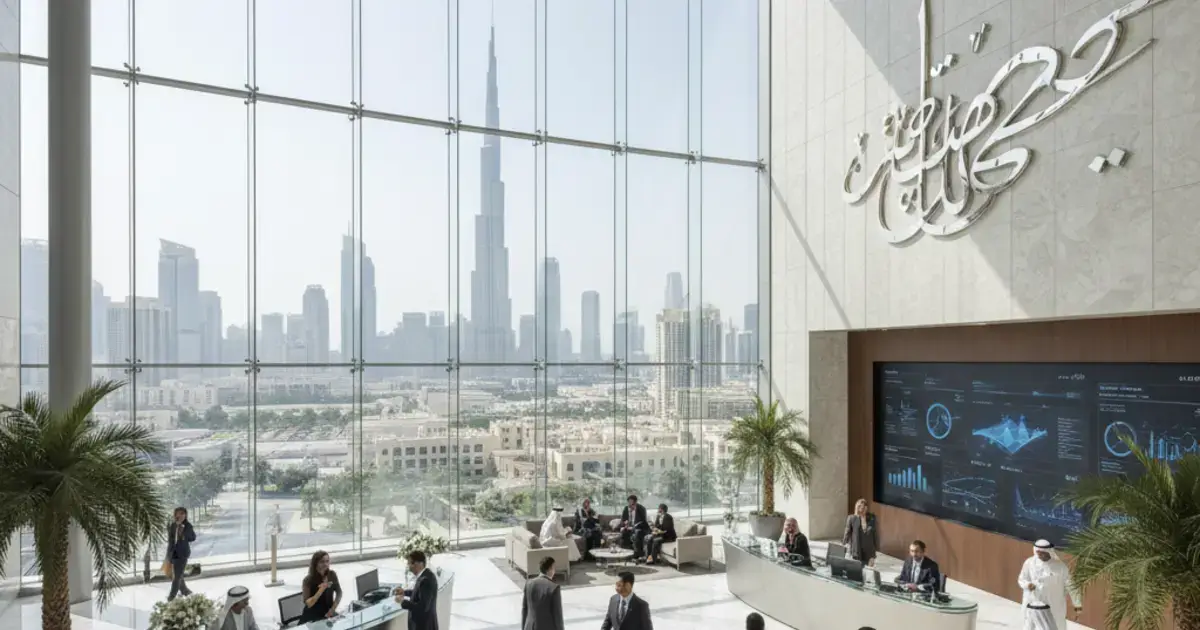
обложка для статьи про Ретаргетинг в Фейсбук: Как вернуть клиентов в Дубае

Why Your Fujairah Ads Fail: Boost ROI & Profits in UAE

If your advertising isn’t paying off in Fujairah, it’s a clear signal that your marketing strategy needs a deep and systemic overhaul. In most cases, the problem isn’t with the ad channel itself or the product quality, but rather with a misunderstanding of the local market, incorrect targeting, irrelevant offers, or, most critically, a complete absence or poor quality of expense analysis in the Emirates. The solution requires a comprehensive approach: from a detailed study of Fujairah’s unique target audience to optimizing every stage of the sales funnel, so that every dirham invested in promotion brings not just impressions, but real, measurable profit, instead of leading to chronically low profits in the UAE.

Key Takeaways

  • Low profits in the UAE from advertising in Fujairah are most often caused by a deep misunderstanding of the unique regional specifics and consumer behavior of the local market.
  • The key to a successful advertising campaign is thorough and continuous expense analysis in the Emirates, which allows for prompt identification of inefficient channels, audiences, and creatives.
  • Mandatory adaptation of creatives, messages, and offers to the cultural, demographic, and economic characteristics of Fujairah’s target audience is not a recommendation, but a critical requirement.
  • Regular competitive analysis and studying the strategies of successful players in the local market help avoid costly mistakes and find unique niches for promotion.
  • To ensure advertising ROI, it’s crucial to build a complete and optimized sales funnel, not expecting instant conversions from cold traffic, but systematically guiding the client towards a purchase.

Why Your Advertising in Fujairah Isn’t Profitable: A Deep Dive into the Problems

When advertising isn’t paying off in Fujairah, many businesses first blame the ad platform or insufficient budget. However, in my practice, working with clients across the UAE—from dynamic Dubai to developing Abu Dhabi and more traditional Fujairah—I constantly find that the root of the problem lies deeper. A lack of profit isn’t the failure of a single element, but rather a systemic breakdown caused by a number of interconnected factors. Fujairah, despite all its appeal, requires a unique approach that is often ignored.

article image 0 58

Geographic proximity to Dubai or Sharjah doesn’t mean identical markets. Fujairah has its own demographics, economic characteristics, income levels, and cultural preferences. Applying “one-size-fits-all” advertising strategies, designed for more cosmopolitan Dubai, to Fujairah almost always leads to disappointment and low profits in the UAE. It’s like trying to sell a megayacht in a small fishing village using the same arguments as for millionaires on Palm Jumeirah – it’s simply irrelevant.

Underestimating Fujairah’s Regional Specifics and Target Audience Definition Mistakes

One of the most frequent and costly mistakes when advertising isn’t paying off in Fujairah is an incorrect or overly broad definition of the target audience. Fujairah, unlike Dubai, has a significantly more pronounced local culture and demographic. Families, a more traditional lifestyle, a different level of purchasing power, and other consumption priorities prevail here. Not taking this into account means deliberately draining your advertising budget.

article image 1 28

For example, in Dubai, you can successfully target high-income expats from Europe and North America, offering them exclusive entertainment or luxury real estate. In Fujairah, however, your audience will likely be more focused on local families who value stability, comfort, child-friendly offers, and traditional events. Trying to apply “Dubai-style” targeting to Fujairah will result in your ads being shown to the wrong people, or being completely ignored due to a mismatch with their values and needs.

In my practice, there was a case with a developer expanding their presence in Fujairah. Initially, they used the same targeting settings as for their successful projects in Dubai. The result was disastrous: very expensive clicks, a minimal number of inquiries, and extremely low-quality leads. After a deep analysis and retargeting, we narrowed the audience to residents of Fujairah and nearby emirates, focusing on families with children interested in affordable housing with good infrastructure and proximity to nature. This allowed us to reduce the cost per lead by 60% and increase conversion to property viewings by 3 times in just a few weeks.

article image 2 25

Checklist: What to consider when analyzing your target audience in Fujairah:

  • Demographics: Age, gender, marital status, presence of children. Fujairah often has a younger and more family-oriented demographic.
  • Economy: Average income level, purchasing power, price sensitivity. Price expectations may differ from Dubai.
  • Culture and Traditions: Local customs, religious holidays, leisure preferences. Advertising should be respectful and appropriate.
  • Geography: The exact location of your audience in Fujairah, possibly considering specific districts or settlements.
  • Interests: What hobbies, activities, and media do local residents prefer?

Irrelevant Creatives and Offers: When “What Works in Dubai” Doesn’t Work in Fujairah

Imagine seeing an advertisement for a luxury car when you’re looking for a family SUV. Not only is it a waste of time, but it can also be annoying. The same happens when creatives and ad offers that are successful in Dubai are applied in Fujairah without adaptation. Dubai is oriented towards an international audience, innovation, exclusivity, and a dynamic lifestyle. In Fujairah, where stability, family values, connection to nature, and a more traditional approach are valued, these same messages might be perceived as alien or even off-putting.

article image 3 21

Brightness, aggressiveness, and an emphasis on “luxury” might be effective for a certain segment in Dubai, but in Fujairah, sincerity, a focus on family comfort, quality of life, proximity to nature, and community will work much better. Pictures of skyscrapers and trendy parties that perform well in Dubai should be replaced in Fujairah with images of happy families, picturesque mountains, beaches, and local landmarks. The language of advertising is also important: using Arabic or its dialects, as well as a respectful tone, can significantly increase responsiveness.

Too general, non-specific offers also lead to low conversion rates. For example, instead of “Best Real Estate in the UAE,” it’s better to offer “Cozy Family Villas in Picturesque Fujairah with Mountain Views.” The offer should be specific, clear, and address a pressing problem or desire of a client from Fujairah. Using local landmarks or well-known figures (influencers) in Fujairah in your creatives can significantly boost engagement and trust, as I’ve already covered in detail in the article on the role of UGC in targeted advertising. People trust what they see and recognize in their surroundings.

article image 4 2

Practical example: One of our clients, a coffee shop chain, used the same ad banners in Fujairah as they did in Dubai: stylish photos of baristas, modern interiors. The response was weak. We changed the creatives: the photos now featured smiling local families at tables, children, traditional Arabic sweets, and a “Family Lunch” promotion. In the ad copy, we emphasized fresh local products and a cozy atmosphere. The result was a 40% increase in foot traffic and a 15% increase in average check size in the first month.

Ignoring End-to-End Analytics and Superficial Expense Analysis in the Emirates

Many companies continue to launch advertising campaigns without paying due attention to metrics and without conducting adequate expense analysis in the Emirates. It’s like sailing a ship without a compass or map, hoping you’ll eventually reach the right shore. Without systematic analysis, it’s impossible to understand which campaigns are profitable and which are unprofitable, and what’s worse—blindly increasing the budget for ineffective campaigns is a direct path to draining your budget and suffering chronically low profits in the UAE.

article image 5 1

Simply tracking the number of clicks or impressions isn’t enough. For a true understanding of ad effectiveness, you need end-to-end analysis that links advertising costs to actual sales. This means tracking the entire customer journey: from the first ad click to making a purchase and, ideally, repeat sales. If you don’t know how much it costs to acquire one customer and how much profit they bring, you’re working blindly.

It’s important to track Key Performance Indicators (KPIs) not just individually, but in their interrelationship. Here are the main ones:

article image 6 1
  • Cost Per Click (CPC): How much you pay for each click on an ad. A high CPC in Fujairah can indicate excessive competition, irrelevant keywords, or low ad quality, which reduces its ranking.
  • Cost Per Lead (CPL): How much one inquiry from a potential client (application, call, message) costs. If the CPL is too high, it could be a problem with targeting, the offer, or the landing page.
  • Customer Acquisition Cost (CAC): The total cost of acquiring one paying customer. This metric should be lower than the customer’s lifetime value (LTV), otherwise your business will operate at a loss.
  • Conversion Rate (CR): The percentage of visitors who complete a target action (purchase, form submission). A drop in conversion rate can be a critical factor indicating issues with the website, offer, or usability.
  • Return On Ad Spend (ROAS/ROI): The main metric reflecting profit from advertising costs. ROAS shows the revenue for every dirham spent, while ROI considers all investments, including non-advertising ones. If these metrics are low, then the advertising isn’t paying off.

Regular and in-depth analysis of these metrics, considering segmentation by channels, campaigns, and audiences, allows for quick strategy adjustments, reallocating budget to more effective campaigns, and ultimately increasing profitability. Without this, simply stating that “advertising isn’t paying off” holds no value, because you don’t know where the problem actually lies.

High Competition and Incorrect Pricing: How to Stand Out in a Crowded Market

The Fujairah market, like other emirates, can be quite competitive, especially in popular niches such as real estate, tourism, automotive, or retail. If your competitors offer more attractive prices, better terms, a stronger brand, or simply communicate their value more effectively, your advertising will struggle to break through. This is particularly noticeable in sectors with high price sensitivity, where even a slight difference in price can be a deciding factor for consumers.

article image 7 1

Many companies focus solely on price, trying to be the cheapest. This often leads to price dumping and, consequently, reduced margins and low profits in the UAE. Instead, you need to conduct a thorough competitive analysis to understand what other players are offering, their strengths and weaknesses, and find your own Unique Selling Proposition (USP). Perhaps your advantage isn’t the lowest price, but rather higher service quality, product exclusivity, guarantees, a unique location, or additional bonuses.

For example, in Dubai, I worked with a company selling unique handmade products. Competition was high, and large retailers offered similar items at lower prices. Instead of lowering prices, we focused on the brand story, material quality, individual approach, and design exclusivity. In our advertising, we highlighted these USPs, creating content that showcased the product creation process and the craftsmanship of the artisans. This allowed us not only to maintain high prices but also to increase sales by attracting an audience that values exclusivity and handmade work.

article image 8 1

Sometimes, even a small change in an offer or its positioning can radically alter product perception and affect advertising ROI. This could be a unique after-sales service, a long-term warranty, a loyalty program, or an emphasis on product sustainability. It’s crucial to clearly articulate why a customer should choose you and convey this message through every element of your advertising campaign.

Problems in the Sales Funnel: When Leads Slip Through Your Fingers

Advertising is just the first stage of the sales funnel, its job is to grab attention and generate a lead. If a potential customer clicks on an ad but then encounters obstacles on the path to purchase, they will most likely leave. Ad effectiveness directly depends on the quality and optimization of each subsequent step in this funnel. If advertising isn’t paying off in Fujairah, it might not just be a problem with the ad itself, but with the entire system post-click.

article image 9 1

The sales funnel should be seamless and intuitive from the first touchpoint to the completion of a purchase. What could go wrong?

  • Landing Page: If a customer lands on an uninformative, slow-loading, non-mobile-responsive page with an outdated design or complex interface, they will leave within a few seconds. The page must be highly relevant to the ad, contain a clear Call to Action (CTA), and be easy to digest.
  • Lead Processing Quality: Even the highest quality lead loses value if it’s not responded to promptly or if handled by unqualified managers. Response speed and the professionalism of the sales team are crucial. In the UAE, where high-speed communication is the norm, a delay of a few hours can cost you a client.
  • Ease of Purchase/Order Process: Complex order forms, many mandatory fields, confusing payment methods, lack of delivery or pickup options—all these create friction and deter buyers. The process should be as simple and transparent as possible.
  • After-Sales Service: If a customer encounters problems after purchase and doesn’t receive adequate support, it will not only spoil their experience but also significantly reduce the likelihood of repeat purchases and referrals.

Working with one of my clients in Dubai, we faced a problem where advertising generated many leads, but sales were very low. A detailed audit showed that sales managers were slow to respond to inquiries (up to 24 hours), couldn’t effectively handle customer objections, and lacked a clear sales script. After implementing a CRM system that automated lead distribution and call reminders, and conducting intensive staff training, the conversion rate from lead to sale increased by 20% in two months, which directly impacted the ROI of advertising campaigns. This confirms that the sales funnel is not just about traffic, but about every stage of customer interaction.

article image 10 1

Typical Technical and Strategic Mistakes Killing ROI in the UAE

Experience shows that many companies in the UAE, when faced with their advertising not paying off in Fujairah or another emirate, make the same critical mistakes. These missteps not only lead to low profits in the UAE but also create a distorted view of the effectiveness of digital marketing as a whole. Fortunately, most of them can be easily corrected if you know what to look for.

Lack of Pixels and Underestimating the Power of Retargeting

One of the most common and easily fixable mistakes is the lack of advertising pixel installation (e.g., Facebook Pixel, Google Ads Tag) or their incomplete setup. Many businesses simply launch campaigns and forget about data collection. Pixels are your spy in the world of user behavior. They allow you not only to track actions on the website (page views, add to cart, purchases) but also, more importantly, to collect audiences that have already interacted with your website, app, or even ad creatives.

article image 11 1

Retargeting (or remarketing) to these “warm” audiences, according to our data, is on average 30-40% more effective in terms of conversion than showing ads to “cold” users. Imagine: someone visited your website but didn’t make a purchase. Maybe they got distracted by a call, were just comparing prices, or needed time to think. With retargeting, you can show them a personalized ad, reminding them about your product, offering a discount, or additional benefits. This is critically important for reducing CAC (Customer Acquisition Cost) and increasing ROI. Ignoring this tool is literally throwing money away, as you’re not following up with those who have already shown interest.

Neglecting A/B Testing and Audience Creative Fatigue

Launching one version of an ad or landing page and expecting a miracle is not a strategy; it’s a lottery. Without constant A/B testing, you’ll never know which headline, image, text, call to action, or audience works best. The UAE market is dynamic, preferences change, and what worked yesterday might not be effective today.

It’s necessary to constantly test various elements: headlines, images, videos, ad copy, creative formats, target audiences, and call-to-action buttons. For example, in one real estate project in Abu Dhabi, changing a single phrase in the ad headline from “Invest in Abu Dhabi” to “Your Dream Home in Abu Dhabi: Unique Offers” increased CTR by 15% and reduced CPL by 10%. Such seemingly minor changes can have a huge cumulative effect on overall advertising ROI.

Furthermore, audiences eventually “get tired” of the same creatives. Repetitive ads become invisible or elicit a negative reaction. This is called “banner blindness” or “creative fatigue.” Regularly updating ad materials, using dynamic creatives, and employing various formats (images, videos, carousels, stories) helps maintain audience interest and prevent a drop in campaign effectiveness.

Mobile Traffic and Website Loading Speed: Why It’s Critical for the UAE

In the UAE, mobile traffic significantly outweighs desktop traffic. According to statistics, most users browse webpages and interact with ads specifically on smartphones. If your website or landing page is poorly adapted for mobile devices (inconvenient navigation, small font, unoptimized images, slow loading), you’re losing a huge portion of potential customers. This is a direct path to draining your budget, because you’re paying for clicks that don’t lead to conversions due to a poor user experience.

Google has long switched to mobile-first indexing, meaning it primarily evaluates the mobile version of your website. Slow page loading is a death sentence for your conversions. Every extra second of loading can reduce the conversion rate by 7-10% and increase the bounce rate. In the hot climate of the UAE and constant movement, users won’t wait for your site to load; they’ll simply move on to competitors.

Be sure to use tools to check website loading speed (e.g., Google PageSpeed Insights) and ensure your site is fully responsive across various mobile devices. Optimize images, use caching, minimize the number of scripts and server requests. Mobile usability should be a priority, especially when your advertising isn’t paying off in Fujairah due to high bounce rates.

Non-Compliance with Local Advertising Rules and Ethics: Legal and Cultural Risks

Advertising laws and cultural norms in the UAE have their own peculiarities, which differ significantly from Western countries. Violation of these rules can lead not only to ad account blocks and fines but also to serious damage to brand reputation. The UAE has strict rules regarding content that might be considered offensive, indecent, false, or contrary to Islamic values.

Examples of taboo subjects include: alcohol (for most advertising channels), tobacco, gambling, and any content that might be perceived as disrespectful to religion, government, local traditions, or culture. Even images of people must be carefully selected to avoid undesirable associations. Always check your creatives and texts for compliance with local norms and the rules of advertising platforms, which often already have built-in restrictions for the MENA region. Consulting with local experts or lawyers can prevent costly mistakes.

Lack of Long-Term Marketing Strategy and Chaotic Actions

Launching advertising without a clear, well-thought-out strategy is one of the main reasons for failure, often leading to advertising not paying off in Fujairah. Many companies start advertising campaigns impulsively, without understanding long-term goals, target audience, USP, budget, and expected results. This leads to chaotic actions, constant changes in tactics, and ultimately, a wasteful expenditure of money.

A strategy is not just a set of advertisements. It’s a comprehensive plan that defines: who your customer is, what you’re offering them, why they should choose you, through which channels you’ll reach them, what budget you’re willing to allocate, what metrics you’ll track, and what goals you’re setting. As I’ve already noted in the article on a year-long promotion strategy in Dubai, the absence of a clear plan leads to vague goals, inefficient resource allocation, and a lack of sustainable growth.

A good strategy includes stages of testing, scaling, and optimization. It takes into account both short-term and long-term goals, allowing you to systematically build market presence, foster brand loyalty, and achieve sustainable profit growth. Without such a plan, you’ll constantly jump from one “magic bullet” to another, wasting time and money without ever getting the desired results.

Step-by-Step Plan: How to Conduct Deep Expense Analysis and Increase Profits in the Emirates

Effective expense analysis in the Emirates is not just about counting money spent, but a foundation for making informed decisions that significantly boost your advertising profitability, especially when advertising isn’t paying off in Fujairah. This process demands methodicalness, attention to detail, and a deep dive into the data. Here’s a step-by-step plan I use with clients to turn expenses into profit.

  1. Gather Data from All Sources:

    The first step is to collect all possible information about your advertising campaigns and their results. This isn’t limited to ad accounts. You need:

    • Ad Accounts: Google Ads, Facebook Ads Manager (for Instagram), TikTok Ads, LinkedIn Ads, Snapchat Ads, and other platforms you use. From these, we get data on impressions, clicks, costs, and frequency.
    • Analytics Systems: Google Analytics 4 (GA4) – your main tool for understanding user behavior on the website, conversions, and traffic sources. Make sure all goals and events are set up correctly.
    • CRM System: Salesforce, HubSpot, Zoho CRM, Bitrix24, and others. This is critically important for tracking the customer journey from lead to sale, qualifying leads, monitoring the sales department’s work, and calculating LTV (Lifetime Value).
    • End-to-End Analytics Services: If used (e.g., Roistat, Calltouch), they integrate data from all sources, providing a complete picture from click to profit.
    • Call Tracking Systems: For tracking calls from ads, their sources, and quality.

    Without a complete set of data, any analysis will be incomplete and may lead to erroneous conclusions.

  2. Segment Data:

    Raw data is useless without proper segmentation. Divide your data to see where problems or growth opportunities lie:

    • By Channels: Search advertising (Google Search, Display), targeted advertising (Facebook, Instagram, TikTok), SEO, Email marketing. This helps understand which channel is most effective.
    • By Campaigns: Divide by goals (brand, product, promotion, lead generation) and campaign types.
    • By Audiences: Demographics, interests, retargeting, look-alike. This helps identify which audience is most responsive and profitable.
    • By Creatives/Ads: Which images, texts, videos bring the best results?
    • By Geography: Fujairah, Dubai, Abu Dhabi, Sharjah. This allows you to pinpoint exactly where advertising isn’t paying off in Fujairah and why.
    • By Devices: Mobile, desktop, tablets.

    The more detailed the segmentation, the deeper the insights you can draw.

  3. Calculate Key Metrics:

    After collecting and segmenting the data, we proceed to calculate and interpret KPIs. Make sure you understand the meaning of each:

    • CTR (Click-Through Rate): The percentage of clicks from impressions. A low CTR often indicates irrelevant creatives, a poor ad, or incorrect targeting.
    • CPC (Cost Per Click): The cost of one click. A high CPC can be the result of fierce competition, low ad quality (poor Ad Rank), or unoptimized bids.
    • CPL (Cost Per Lead): The cost of one lead. Helps understand how much it costs to acquire a potential customer. If CPL is too high, you need to work on targeting, the offer, or the landing page.
    • CPA (Cost Per Acquisition): The cost of a target action (e.g., form submission, call, registration). Differs from CPL in that it can account for deeper target actions.
    • CR (Conversion Rate): The percentage of visitors who complete a target action. A drop in conversion rate can be a critical factor indicating issues with the website, offer, or usability.
    • ROAS (Return On Ad Spend): Revenue from advertising divided by advertising expenses. Shows how many dirhams you get for every dirham spent. For example, a ROAS of 200% means you received 2 dirhams in revenue for every dirham invested.
    • ROI (Return On Investment): Overall return on investment. Accounts for not only advertising but also all associated costs (product cost, manager salaries, logistics, etc.). Provides the most complete picture of profitability.
  4. Compare with Benchmarks:

    Your metrics don’t exist in a vacuum. Compare your KPIs with industry averages in the UAE and for specific emirates. This will give you an idea of how effective your campaigns are compared to competitors. Study available industry reports and, if possible, analyze competitor data through external services. This will help determine where you excel and where you lag behind.

  5. Identify Unprofitable Segments:

    At this stage, you should clearly see which campaigns, audiences, creatives, or channels have a low ROAS/ROI or an excessively high CPL. These are the areas where your low profits in the UAE are a direct consequence of inefficient investments. For example, you might discover that:
    * Instagram advertising brings 3 times fewer leads than Facebook, with the same budget.
    * A campaign with general targeting for Fujairah is ineffective, while a campaign targeting a specific area shows excellent results.
    * A certain creative has a high CTR but a very low conversion rate on the website, indicating a mismatch with user expectations.

  6. Optimize and Test:

    Based on the identified data, take action:

    • Stop or radically adjust unprofitable campaigns and ad groups.
    • Reallocate the budget in favor of the most effective campaigns and audiences.
    • Conduct A/B tests for new creatives, offers, landing pages, and targeting options. As we do when launching advertising for niche products with a budget, every element can be tested and improved.
    • Optimize bids and budgets based on the actual cost of target actions.

This constant cycle of analysis, identifying problems, and subsequent optimization allows not only to avoid situations where advertising isn’t paying off in Fujairah, but also to continuously increase the effectiveness of advertising campaigns, turning them into a stable source of profit in the Emirates.

Effective Strategies to Boost Ad ROI in Fujairah: My Practical Approach

To ensure that advertising doesn’t just pay off in Fujairah, but actually generates stable and growing profits, you need not just a reactive approach to problems, but a proactive, systemic strategy. Drawing on years of experience working with dozens of clients in Dubai, Abu Dhabi, and Fujairah, I’ve identified several key strategies that have proven effective in the UAE market under current conditions.

Hyper-Localization: Winning the Trust of the Local Community

As I’ve mentioned, Fujairah is a unique market. Hyper-localization means not just language adaptation, but a deep dive into the local context. This includes:

  • Visual Content: Use photos and videos of recognizable Fujairah landmarks – the Hajar Mountains, the Khorfakkan Corniche, historical forts, local parks, as well as people who look like Fujairah residents. This creates a sense of proximity and trust.
  • Text Content: Mention local events, holidays, and cultural features. For example, if you’re promoting a restaurant, offer special dishes for local holidays or promotions for families living in specific areas.
  • Local Accents: Use specific terms or names understood only by locals. This shows that you truly know and appreciate their culture.
  • Special Offers: Develop offers that address the specific needs of the local audience. For example, for a grocery delivery company, these could be offers for large families or free delivery to remote areas of Fujairah, where it’s particularly valued.

Hyper-localization allows your advertising not just to be seen, but to be heard and embraced by the local community, which is the foundation for building loyalty and long-term relationships.

The Power of Community Marketing and UGC in the UAE

From my observations in the Dubai market and other emirates, trust in recommendations and local opinion leaders (influencers) is very high. In the UAE, people tend to trust their social circle and those they consider authorities. Therefore, investing in community marketing and encouraging User-Generated Content (UGC) are powerful tools:

  • Working with Influencers: Find micro- and nano-influencers who have real sway in Fujairah. These could be local bloggers, popular social media users, or public figures. It’s crucial that their audience matches your target audience and their recommendations appear natural.
  • Encouraging UGC: Encourage users to leave reviews, share photos and videos of your product or service. Run hashtag contests, create interactive campaigns, where users can showcase their experience interacting with the brand. User-generated content is the most genuine proof of quality and trust.
  • Reviews and Case Studies: Actively collect and publish testimonials from Fujairah locals. If your business is B2B, create case studies with successful local companies. This builds trust and significantly reduces customer acquisition costs, as people see real results and success stories.

Integrated Multi-Channel Approach: Maximizing Touchpoints

Limiting yourself to a single advertising channel in today’s digital world means voluntarily losing customers. Modern consumers in the UAE often interact with a brand through multiple touchpoints before making a purchase. An omnichannel approach ensures broader audience coverage and creates a synergistic effect:

  • Combine Channels: Use targeted advertising (Facebook, Instagram, TikTok) to generate demand and engage with interests, Google Ads (Search and Display Network) to capture existing demand, as well as tools like WhatsApp targeting for premium products or services that require direct, personalized communication.
  • Cross-Channel Retargeting: If a user saw your ad on Instagram but didn’t click, show them an ad on the Google Display Network. If they visited your website but didn’t buy, send them a personalized offer via Email or WhatsApp.
  • Content Marketing: Develop a blog, publish articles, and videos that answer your target audience’s questions. This helps build expertise and attract organic traffic.
  • Online and Offline Integration: If you have a physical presence in Fujairah, integrate online advertising with offline promotions, QR codes, and in-store invitations.

Analysis of projects in the Emirates shows that the more relevant touchpoints a brand has with a potential customer, the higher the conversion rate and the overall return on advertising efforts.

Optimizing Conversion Paths: From Click to Customer

Even the most brilliant advertising campaign will fail if you have a poor landing page or an inefficient lead processing system. Your landing page must be as simple, fast, informative, and intuitive as possible. Any friction in the inquiry or order process increases the cost per lead and reduces conversion. What needs optimization:

  • Loading Speed: A maximum of 2-3 seconds. Use compressed images, caching, optimized code.
  • Relevance: The page content must completely match the advertisement. If the ad promises a discount, it should be immediately visible on the page.
  • Clear Call to Action (CTA): Buttons like “Buy,” “Submit Inquiry,” “Book a Consultation” should be prominent, clear, and easily accessible. Test different wordings and colors.
  • Minimalist Forms: Request only the most essential information. The fewer fields in the form, the higher the conversion rate. For UAE markets, simple forms with just a name and phone number often work well, as people prefer quick communication.
  • Responsiveness: Mandatory adaptation for mobile devices.
  • Lead Processing Quality: Instant response (ideally within 5 minutes), professional and trained sales managers who know the product, can handle objections, and are oriented to local specifics. Use a CRM to automate this process.

Working with clients, I often see that refining landing pages and sales scripts, as we do when launching advertising for niche products with a budget, yields one of the fastest and most significant increases in ROI.

Continuous Learning and Adaptation: Staying One Step Ahead of Competitors

The advertising market in the UAE, like worldwide, is very dynamic. New trends, changes in ad platform algorithms, the emergence of new tools, shifts in consumer behavior—all these demand continuous learning and adaptation. If you remain static, your competitors will quickly overtake you, and your advertising not paying off in Fujairah will become commonplace.

  • Stay Updated on Trends: Subscribe to industry publications, blogs, and news channels that cover changes in digital marketing and the UAE market.
  • Attend Webinars and Conferences: Learn from leading experts, exchange experiences with colleagues.
  • Test New Tools: Explore new ad formats, new platforms, new approaches to analytics. Don’t be afraid to experiment with small budgets.
  • Analyze Competitors: Use spy tools and manual analysis to understand what your competitors are doing, which campaigns are successful for them, and which are not.

“In our practice, a meticulous approach to data analysis and a willingness to constantly experiment with creatives and audiences allowed us to achieve an 80% increase in organic traffic for one of our clients in Fujairah over 6 months, and a 120% increase in advertising ROI. This was possible thanks to the implementation of all the strategies listed above and a continuous readiness for change.”

Indicators for Strategy Revision: When It’s Time for Radical Changes

The decision to revise your advertising strategy shouldn’t be impulsive, but you also shouldn’t delay it, especially if advertising isn’t paying off in Fujairah and low profits in the UAE become a chronic, budget-draining problem. There are clear indicators that signal the need for serious changes, not just minor adjustments.

Completely revise your strategy if you observe one or more of the following conditions:

  • ROAS (Return On Ad Spend) is consistently below target: If you’re spending more on advertising than you’re earning from it, this is the most obvious and alarming sign of a problem. Every niche has its acceptable ROAS (e.g., 200-500% depending on margin and business model), but if your metric is in the red zone (less than 100%) for an extended period (more than 2-3 months after optimizations), you need to act immediately. This means you’re losing money with every ad campaign.
  • CPA (Cost Per Acquisition) is rising without an increase in profit: If the cost of acquiring a customer is constantly increasing, but the number of sales, average check, or LTV (Lifetime Value) isn’t growing proportionally, your unit economics are suffering. This could be due to auction overheating, deteriorating lead quality, audience fatigue, or problems in the sales funnel. If CAC becomes higher than LTV, your business is heading for losses.
  • Consistent decline in engagement (CTR, ER) and lead quality: Your audience stops reacting to your ads. Low CTR, a decrease in likes, comments, and shares, as well as complaints about the low quality of incoming leads (lots of spam, uninterested users)—all of this can indicate creative “fatigue,” incorrect targeting, an irrelevant offer, or increased competition. If users actively click but then quickly leave the site, that’s also an indicator of problems.
  • Market conditions, legislation, or consumer behavior have changed: In the UAE, as worldwide, trends, economic conditions, and rules of the game are constantly changing. For example, changes in consumer behavior after the pandemic (shift to online, growing interest in local products), new data protection laws, or financial regulations can significantly impact ad effectiveness, requiring a radical overhaul. Also, changes in seasonality or economic downturns can affect demand.
  • New competitors have emerged, or their strategies have become significantly more aggressive: If the market has become denser, new, well-funded players have appeared, and your competitors are launching brighter, more advantageous, or innovative campaigns, you need to not just adapt, but rethink your positioning and strategy to avoid losing market share. You might need to find a new niche or offer a completely new USP.
  • More than 3-6 months have passed without noticeable progress after active optimizations: Depending on the niche and scale, an advertising campaign needs time to “ramp up,” collect data, and undergo initial optimization. However, if after 3-6 months of active tests, adjustments, and optimization, you don’t see a stable positive dynamic in key performance indicators (ROAS, CPA, CPL, CR), this is a serious reason for radical changes. Some methods, such as building complex sales funnels or brand building, might require more time to evaluate, but basic efficiency metrics should improve. If advertising isn’t paying off within a reasonable timeframe after all optimizations, then it’s time to completely rethink your approach.

It’s important to remember that advertising – it’s an investment, and it doesn’t always bring instant profit. But if it’s consistently operating at a loss or its effectiveness is stagnating, ignoring these signals will cost you much more than a timely strategy revision. It’s time for a deep audit and, possibly, a complete overhaul of your marketing approach in Fujairah.

Frequently Asked Questions

How long does it take for advertising in Fujairah to start paying off?

Typically, to objectively assess the ROI of advertising in Fujairah, it takes 1 to 3 months of an active campaign. The first month is usually spent gathering initial data, testing hypotheses for creatives and audiences, and conducting initial optimization. Advertising algorithms “learn” during this period, understanding which combinations of settings and ads work best. Real, sustainable results for ROI and CPL start to emerge in the second or third month, once you’ve gathered enough information to make informed decisions and implemented key optimizations. For more complex products or services with a long sales cycle, this timeframe might be longer.

Which expense analysis tools are most effective in the UAE?

For effective expense analysis in the Emirates, I recommend using a combination of several key, integrated tools. Firstly, Google Analytics 4 (GA4) for deep web analytics, tracking user behavior, and conversions on your website. Then, ad accounts (Google Ads, Facebook Ads Manager, TikTok Ads) for detailing costs, impression metrics, clicks, and direct conversions within platforms. A CRM system (e.g., Zoho CRM, Salesforce) is also critically important for tracking the entire customer journey from lead to sale, qualifying leads, and calculating Lifetime Value (LTV). In more complex cases or with high traffic volumes, end-to-end analytics systems (Roistat, Calltouch) are useful, as they consolidate data from all sources, providing a complete picture from ad click to actual profit.

How to choose an advertising specialist in the Emirates?

When choosing an advertising specialist or agency in the UAE, pay attention to several key points. First, their experience working specifically with the local market – Dubai, Fujairah, Abu Dhabi, Sharjah. Ask about specific case studies and testimonials from clients in the region, as local specifics are hugely important. Second, assess their understanding of Arab culture, local traditions, and UAE advertising legislation. Third, a good specialist will always be able to provide concrete figures, forecasts, and explain their strategy based on data, not just vague statements. Avoid those who promise instant riches without a preliminary audit of your business and a deep dive into its specifics. Transparency in reporting and communication is also crucial.

How does advertising in Fujairah differ from Dubai?

Advertising in Fujairah differs significantly from Dubai, primarily in terms of demographics, purchasing habits, and the cultural characteristics of the target audience. Fujairah is often characterized by a more traditional, conservative, and family-oriented audience, with lower income levels compared to the Dubai average, and a greater influence of local traditions and values. In Dubai, the emphasis is more often on an international, cosmopolitan audience, luxury, innovation, exclusive offers, and a fast-paced lifestyle. Creatives, offers, and even the language of advertising that work in Dubai might be irrelevant or even perceived negatively in Fujairah, where sincerity, family comfort, and a connection to nature are valued.

Can you achieve ROI in the UAE with a small budget?

Yes, achieving ROI with a small budget in the UAE is entirely realistic, especially if your advertising isn’t paying off in Fujairah due to incorrect setup and significant losses. The key to success is extremely precise and narrow targeting of a niche audience, carefully crafted and hyper-localized offers, focusing on the most effective channels that bring the cheapest leads, and, most importantly, continuous, meticulous optimization. It’s crucial not to try to cover the entire market at once or compete with large players, but to concentrate on the most promising and profitable segments and products. You can start with a budget of $500-1000 per month to test hypotheses and systematically scale effective campaigns.

👉 Subscribe to my Telegram channel.
✉️ Message me on WhatsApp if you need clients.
📸 Follow updates on Instagram.


Most Popular Posts