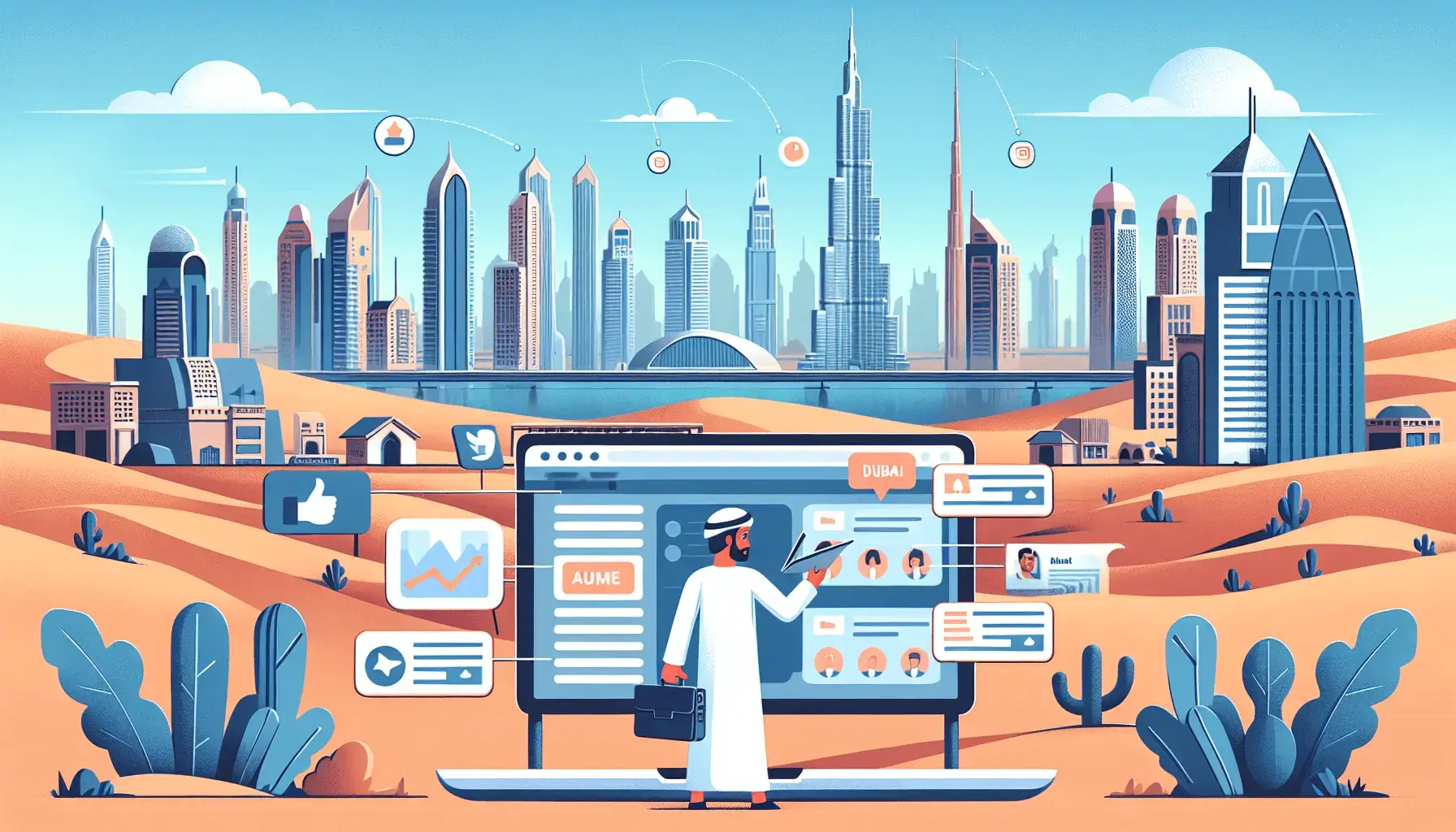

In recent years, Dubai has become one of the primary destinations for Russian entrepreneurs seeking a stable jurisdiction, access to international markets, and a predictable business environment. The UAE’s economic stability, clear regulatory system, and zero personal income tax make the Emirates not just a place to register a company, but a full-scale platform for scaling to the global level.
But entering the Dubai market and actually starting to earn are two different processes. Competition here is significantly higher than in most CIS countries. International brands, European startups, Asian companies, and strong local players all operate side by side. In these conditions, success is determined not by the fact of being present, but by the quality of the marketing system and the depth of adaptation to the local audience.
This article covers: why Russian entrepreneurs choose the UAE, how to build marketing for a business in Dubai, which promotion channels work in the region — and how to achieve stable return on advertising investment.
Why Russian Entrepreneurs Choose Dubai and the UAE
After 2022, the flow of Russian entrepreneurs into the UAE grew sharply. Dubai became the primary relocation point for IT companies, consulting businesses, trading structures, and entrepreneurs from a wide range of industries. There are several reasons, each with a concrete practical dimension.
Stable jurisdiction. The UAE did not join sanction restrictions and maintains a neutral status. For business, this means the ability to work with international partners, receive payments from clients around the world, and bank with institutions that accept transactions in dollars, euros, and other currencies.
Tax conditions. The absence of personal income tax is the strongest argument for entrepreneurs with high personal income. Corporate tax at 9% on profits exceeding 375,000 dirhams, introduced from 2023, remains one of the lowest among jurisdictions with developed business infrastructure.
Access to international markets. Dubai is a logistics and financial hub between Europe, Asia, and Africa. A company registered in the UAE gets convenient access to MENA, South Asian, and East African markets — collectively several billion potential consumers.
Quality of life and infrastructure. For entrepreneurs with families, this is an important factor. High safety levels, international schools, developed healthcare and infrastructure make Dubai a comfortable place not only to work, but to live.
In practice, working with projects in the region shows: entrepreneurs who arrive in the UAE with a clear plan — legal structure, banking strategy, marketing model — reach profitability significantly faster than those who act reactively. Opening a company in Dubai is a complete guide to legal structure, jurisdiction selection, and the first steps in the UAE market.
The UAE Market Through a Marketer’s Eyes: What to Know Before Launching Ads
Dubai is a multicultural market with one of the world’s highest shares of foreign residents. More than 88% of the UAE’s population are expats from over 200 countries. This means “the local audience” here is a relative concept. Several fundamentally different consumer segments coexist within a single market.
Arab local audience. UAE nationals and citizens of other Arab countries — a relatively small but high-income segment. They value status, tradition, personal trust, and Arabic-language communication. They make decisions more slowly but remain loyal clients longer.
Western and European expats. Oriented toward quality, transparency, and Western service standards. They respond well to English-language content, trust reviews and ratings, and actively use Google and LinkedIn.
Russian-speaking residents. An active and purchasing-ready segment that grew significantly after 2022. They respond to Russian-language content, trust personal recommendations, and are active on Telegram and Instagram. For a number of niches — consulting, real estate, healthcare, education — this is one of the key segments.
Indian and South Asian audience. The largest group of UAE residents. High price sensitivity, orientation toward group recommendations, and active use of WhatsApp as a communication channel.
There is no universal solution for all segments. Advertising that performs excellently with the Russian-speaking audience may be completely ignored by the Arabic audience — and vice versa. This is the first thing to understand before launching any advertising campaign in the UAE.
Marketing for Business in Dubai: The Systematic Approach
Chaotic advertising launches in Dubai are a fast way to spend budget without results. The market is competitive, the audience is demanding, and without a clear system even a good product gets lost among dozens of similar offers.
Systematic marketing for business in the UAE is built on several essential elements.
Market and competitor analysis. Before launching ads, you need to understand who is already working in your niche, how they position themselves, which channels they use, and what they communicate to their audience. In Dubai, most competitors are visible: their ads appear in Meta Ads Library, their content is on Instagram and LinkedIn, their reviews are on Google and TripAdvisor. This is free intelligence that many players ignore.
Positioning. What exactly you offer, to whom, and why it’s better than the alternatives — this isn’t an abstract question but the foundation of all advertising materials. In the competitive UAE environment, vague positioning leads to high cost per click and low conversion. A clear, specific offer lowers the cost per inquiry.
Channel selection. Not all channels are equally effective for all niches and audiences. Instagram and Facebook — for B2C and visual products. LinkedIn — for B2B and corporate services. Google — for hot demand and search queries. Telegram — for the Russian-speaking audience. WhatsApp — for conversion and client communication. The right channel combination depends on the product, audience, and budget.
Sales funnel. In Dubai’s competitive environment, most clients don’t convert on the first touchpoint. A multi-stage funnel — reach, warm-up, conversion, retention — delivers significantly higher return on advertising budget than direct ads to cold audiences.
Analytics. Without tracking results, it’s impossible to know what’s working. Cost per click, cost per inquiry, conversion to deal, average order value — these figures must be visible in real time and form the basis for operational decisions.
Targeted Advertising in the UAE: Specifics and Strategies
Targeted advertising on Meta (Instagram and Facebook) is the primary client acquisition tool for most B2C and B2B businesses in Dubai. The platform delivers precise reach of the target audience with measurable results and flexible budget management.
Meta specifics in the UAE that affect results:
Language segmentation is mandatory. Separate campaigns for Arabic-, English-, and Russian-speaking audiences are not optional — they’re a necessity. An ad in Russian shown to an Arabic audience delivers zero results and burns budget. Language targeting through Meta settings or separate ad sets is standard practice for the UAE market.
Visual quality is critical. Dubai has a high concentration of premium audiences. Low visual quality in advertising signals low product quality — in luxury and premium segments this immediately reduces CTR and conversion. Investment in professional photography and design pays back at the level of the first campaigns.
WhatsApp as a conversion channel. In the UAE, WhatsApp is the primary communication channel when making purchase decisions. A direct WhatsApp button in advertising converts significantly better than a website form or phone call. This rule works for virtually every niche — from real estate to healthcare.
Seasonality and cultural context. Ramadan, Eid Al Fitr, UAE National Day, Dubai Shopping Festival — each of these events creates a specific advertising context. Campaigns adapted to seasonal events show significantly higher engagement than standard ads without context.
Hyperlocal targeting. Dubai is a city with clearly defined neighborhoods of different income levels and different audience concentrations. Targeting Downtown, DIFC, and Palm Jumeirah delivers one audience. Targeting Deira or Bur Dubai delivers a fundamentally different one. Using geo-targeting at the neighborhood level substantially improves ad relevance. Effective advertising strategies in Dubai covers specific campaign setup mechanics with examples for different niches in the Emirates market.
Comprehensive Business Promotion in the UAE: Which Channels Work Together
Companies that rely on a single advertising channel create vulnerability: an algorithm change, rising competition, or a seasonal slowdown can collapse the inquiry flow overnight. A comprehensive promotion model distributes risk and creates synergy between channels.
Search advertising (Google Ads). Captures hot demand — people already looking for your product or service right now. High cost per click in competitive niches, but high traffic quality. Especially effective for B2B services, healthcare, legal consulting, and real estate.
Targeted advertising (Meta). Creates demand and reaches audiences who aren’t yet searching for your product but are potentially interested. The best tool for scaling and working with multiple segments simultaneously.
Content marketing and SEO. A long-term tool that builds organic traffic and expert positioning. A website blog with useful UAE market content, a YouTube channel, expert LinkedIn publications — this is an investment that pays back in 6–12 months but creates a stable client flow without ongoing ad spend.
Remarketing. Re-engaging audiences that have already contacted the brand — visited the site, interacted with ads, opened an email. In Dubai’s competitive environment, most people don’t convert on the first touchpoint. Remarketing closes warm audiences with minimal additional cost.
Telegram and WhatsApp marketing. For the Russian-speaking audience, a Telegram channel is one of the most effective warm-up and retention tools. WhatsApp broadcasts to client databases deliver conversion comparable to email marketing in its prime years, at a significantly higher open rate.
Based on results working with companies in the Emirates: businesses using 3–4 channels in combination achieve a cost per inquiry 1.5–2 times lower than those working with a single channel. The synergy works because the audience encounters the brand at multiple touchpoints — and trust grows disproportionately fast. Business promotion in the UAE and Dubai is a full breakdown of channels, budgets, and strategies for different business types in the Emirates market.
Financial Model and Advertising ROI in Dubai
Marketing in the UAE requires different financial thinking than in most post-Soviet markets. Client acquisition cost is higher. Average order value is also higher. Customer lifetime value in some niches is significantly longer. This means evaluating advertising purely on short-term metrics is a mistake.
Key indicators to calculate before launching a campaign:
- Product margin. How much you earn per sale after all costs — this determines the maximum allowable client acquisition cost
- Funnel conversion rate. What percentage of leads become clients. If conversion is low, the problem lies in sales or traffic quality, not in the advertising
- LTV (Lifetime Value). How much a client brings over the entire period of cooperation. In niches with repeat purchases or long-term contracts — healthcare, consulting, education — LTV vastly exceeds the first transaction
- ROAS (Return on Ad Spend). How much revenue each dirham of advertising budget generates. The goal is not to minimize ad spend but to maximize ROAS
- CAC (Customer Acquisition Cost). The full cost of acquiring one client accounting for all channels and marketing operational costs
Entrepreneurs who treat marketing as an investment tool and manage it through numbers achieve stable profitability in the first 3–6 months of active promotion. Those who launch advertising without an analytical model often stop after the first unsuccessful campaigns — not understanding what wasn’t working or how to fix it.
Common Mistakes Russian Entrepreneurs Make Entering the UAE Market
Analyzing projects from Russian and CIS companies entering the Dubai market, a number of recurring mistakes stand out — all avoidable with the right preparation.
Transferring Russian marketing approaches without adaptation. What worked on VKontakte doesn’t work on Instagram in the UAE. Visual culture, audience pain points, call-to-action formats — all of these are fundamentally different. Direct translation of Russian advertising materials delivers weak results.
Betting exclusively on the Russian-speaking audience. The Russian-speaking segment in the UAE is several hundred thousand people. When worked correctly, this is sufficient for many niches. But ignoring the Arabic and English-speaking audiences means abandoning the majority of the market.
Launching ads before sales readiness. In Dubai, speed of response to inquiries is critical — a competitor responds within 3 minutes on WhatsApp. If the sales team isn’t ready to process leads immediately, the advertising budget is lost at the conversion stage.
Lack of local understanding. The specifics of Ramadan, the nuances of working with Arab partners, cultural norms in visual communication — not knowing these details leads to costly mistakes.
Underestimating competitive pressure. Dubai is not a market where you can enter with a mediocre product and survive due to lack of competition. The best companies in the world operate here. Product, marketing, and service must be at the level of international standards. Effective marketing for business in Dubai covers strategies and approaches for building a client acquisition system in the competitive UAE market, accounting for all local specifics.
👉 Subscribe to my Telegram channel.
✉️ Message me on WhatsApp if you need clients.
📸 Follow updates on Instagram.